
5 benefits of honeycomb paper as a bubble wrap alternative
6
min read30 October 2026








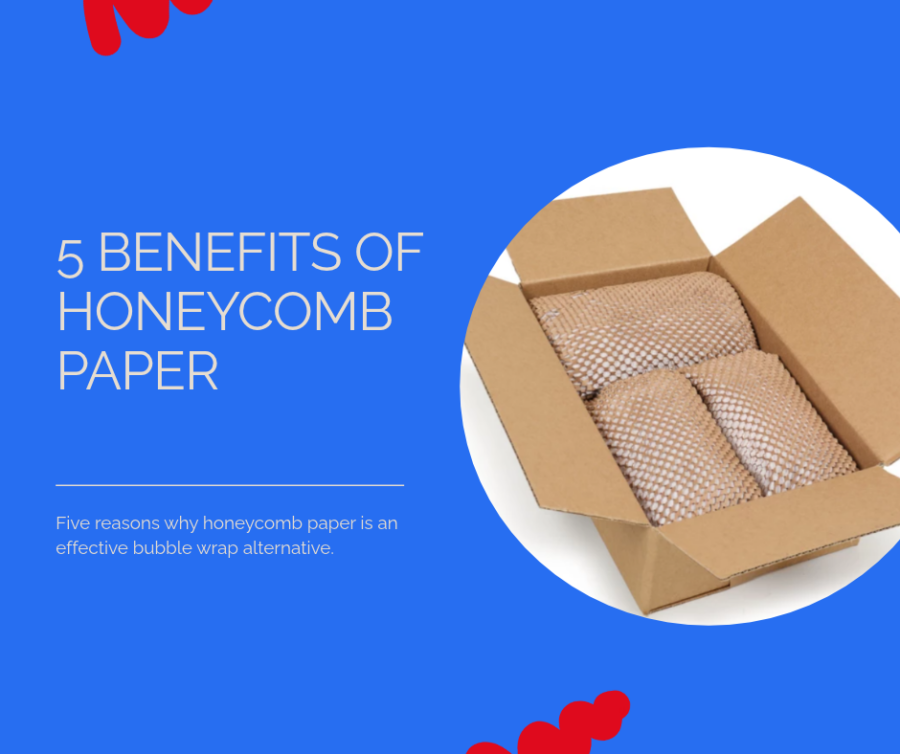
Honeycomb paper is a bubble wrap alternative that protects products in a single layer of kraft paper, with no tape, scissors or plastic. Used with a compact converter, it cuts steps from every parcel and gives customers packaging they can recycle.
In this article, we’ll cover:
Honeycomb paper is die-cut kraft paper that opens into a 3D cell structure when it’s stretched. The cells cushion products and grip each other, so the wrap holds itself closed without adhesive.
To make it, you feed a roll of die-cut kraft paper through a converter. The Geami Wrap ’n Go is a compact, hand-operated converter made by Ranpak, and it’s the setup we’ll refer to or the rest of this article.
Honeycomb paper removes the cutting and taping steps that slow down hand wrapping. As the paper expands, its angled cells interlock, so a wrapped item holds its shape without adhesive.
Your packer pulls the paper through the converter, wraps the product and tears it off by hand. There’s no knife to find, no tape to start and no length of film to trim. Across a shift of several hundred orders, losing those small actions adds up.
It’s quick to learn too, which helps when temporary staff join for peak. And with no tape or blades at the station, you have fewer consumables to reorder and fewer sharp tools on the bench.
Honeycomb paper gives products a cushioned, scuff-resistant layer, which makes it a practical bubble wrap alternative for most fragile goods. Honeycomb wrapping paper forms a mesh of small cells that absorb knocks and vibration in transit.
For delicate surfaces, you can add a white tissue interleaf. It sits between the product and the kraft paper, protecting gloss finishes, polished metal, glassware and ceramics from scratches. Sturdier items can go out in kraft paper alone.
Fewer damaged orders means fewer replacements, refunds and returns to process. Prefer a roll you can use without a converter? Our paper bubble wrap is another plastic-free option.
A manual honeycomb paper converter fits packing areas where space is tight. The Geami Wrap ’n Go needs no power supply, and you can stand it on a table top or mount it on a wall.
Wall mounting keeps bench space clear for boxes, labels and the products themselves. It also works behind a shop counter, where there’s rarely room for a floor-standing roll holder. The modular design lets you run kraft paper alone or kraft paper with tissue.
Honeycomb paper packaging is 100% paper, made from FSC-certified kraft. FSC-certified means the paper comes from forests managed to Forest Stewardship Council standards.
For your customers, disposal is simple. The wrapping is recyclable, so it goes in with their other paper rather than leaving them to work out what to do with plastic film.
For your business, it’s an alternative to bubble wrap that cuts the plastic you buy and send out. If you report under the UK’s extended producer responsibility (EPR) scheme for packaging, it also shifts the material mix you declare.
Honeycomb paper wrap looks tidier and more considered than plastic when a customer opens the box. The kraft has a natural, textured finish, and the white tissue adds a clean inner layer for gifts and premium products.
Online, that first look shapes how customers judge your brand. In a shop, staff can wrap a purchase at the till in front of the customer, so the protection becomes part of the service.
One converter covers both channels, which suits businesses that sell online and in store.

A manual converter suits low- to mid-volume wrapping. That covers independent retailers, growing e-commerce brands and any business that packs fragile goods by hand at one or two stations.
If you’re wrapping thousands of items a day, a powered paper wrapping machine will keep pace better. We can help you compare alternatives to bubble wrap based on your order volumes, product types and the space you have.
Honeycomb paper turns one roll of kraft into a wrap that protects, holds itself together and looks good on arrival. For packing teams, the most obvious gain is fewer steps per order, and no plastic left for customers to deal with.
Start by wrapping your most fragile or most frequently ordered products. You’ll see quickly whether kraft alone does the job or whether the tissue interleaf is worth adding.
If you’re testing a bubble wrap alternative at your packing station, our paper packaging range brings converters, rolls and tissue together in one place.
No. Honeycomb paper wraps around a product to cushion it, while paper void fill fills the empty space in the box around the wrapped item.
Yes, you need a converter or dispenser to stretch the die-cut paper into its cell structure. Manual converters suit smaller operations, while powered machines handle higher volumes.
Yes. Kraft paper on its own suits sturdy items, and the tissue is worth adding for surfaces that mark easily.
Most fragile items need at least two layers, with extra around corners, handles and edges. Wrap a few test parcels to find the right amount for each product.
Yes, when you wrap several layers and add tissue to protect the surface. Pack the wrapped item in a snug box so it can’t move in transit.
Yes. The paper keeps much of its structure after unwrapping, so customers can reuse it for storage or for posting items on.