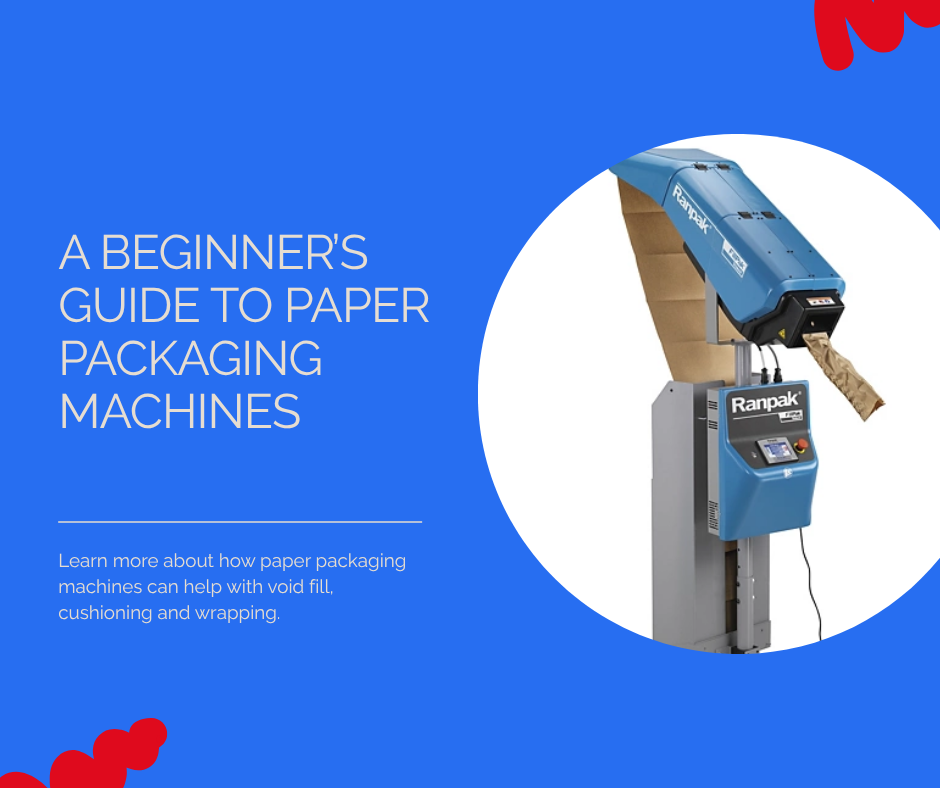
A beginner’s guide to paper packaging machines
5
min read24 July 2026








Paper packaging machines do three jobs: fill empty space in a box, cushion fragile items and wrap delicate goods. Picking the right one is the first step to faster packing, less damage in transit and a move away from plastic.
This guide is for anyone weighing up their first machine, whether you pack 10 parcels a day or 10,000.
In this article, we’ll cover:
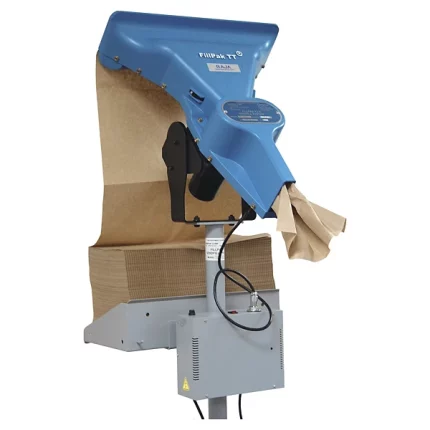
Paper packaging machines turn rolls or fanfold paper into protective material at your packing bench. They fall into three groups by job: void fill, cushioning and wrapping. Each uses paper rather than plastic, so the output is recyclable and easy for your customer to dispose of at kerbside.
Most machines come in manual and powered versions, so there’s an option whether you pack occasionally or run a full despatch line. For a run-through of every option, see our guide to the different types of packaging machines.
Seeing the machines run makes the differences obvious. In the short video below, I walk you through void fill, cushioning and wrapping in under three minutes and show the kit working on real parcels.
Watch it to see each machine in action and pick up the details that are easier to show than describe.
Void fill paper fills the empty space in a box so contents can’t move in transit. It drops straight into the carton, and you can prepare a parcel in seconds.
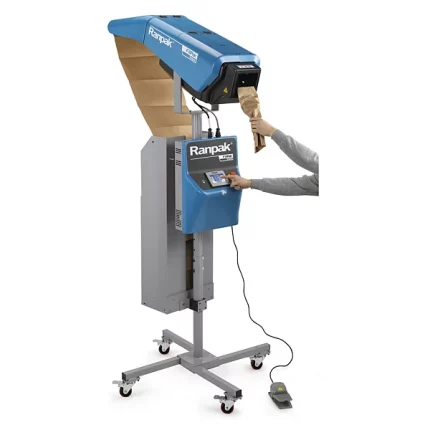
For lower volumes or a bench with no power supply, a manual dispenser is enough. Busier operations use a powered paper void fill machine. A foot-pedal model frees both hands and lets you set the paper fed per parcel, controlling material use. For larger boxes, some machines create a structured pad that fills bigger gaps without extra paper.
Paper cushioning uses folded paper pads that nest around an item to absorb shocks and protect heavy or fragile goods. It suits everything from car parts and aviation components to cosmetics and electronics.
A semi-automatic machine makes two-ply pads on demand and works well for steady, mixed packing. Higher-volume benches use automated machines that pre-produce pads and let you set the pad length, so the cushion matches the product.
Use paper wrapping for small, delicate items where presentation matters as much as protection. A paper wrapping machine turns honeycomb kraft into a cushioned wrap. It expands as you pull it, and the cut cells interlock around the product, so it holds without tape.
Pair it with interleaf tissue for a cleaner unboxing, and combine it with void fill for extra security in larger parcels. Because it’s paper, it’s recyclable, with no plastic for your customer to strip out and bin.
Start with the problem, not the machine. If products shift inside the box, you need void fill. For heavy or fragile items that must survive the whole journey, cushioning is the safer choice. For small delicate items, paper wrapping packs them faster than bubble wrap.
These jobs overlap. Cushioning pads also work as void fill, so one machine covers both. If you’re unsure where to start, see the machines matched to your own products before you commit.
Ready to match the right machine to your products? Our specialists will pair void fill, cushioning or wrapping to your workflow and sustainability goals, from demonstration through to aftercare.
Not always. Manual dispensers work without power for lower volumes, while powered and automated machines suit busier despatch lines.
For filling space and stopping movement, paper void fill does the same job as air pillows or loose fill, and it’s easier for customers to recycle at kerbside.
Often yes. Cushioning pads can double as void fill, so one machine can cover both jobs. Wrapping uses a different paper, so it’s a separate step.
Footprint varies by model, from a small benchtop dispenser to a floor-standing automated unit. A specialist can size the right machine to your bench and volume.
Yes. Manual and semi-automatic machines are built for lower volumes, so a small operation can pack faster without a full automated line.