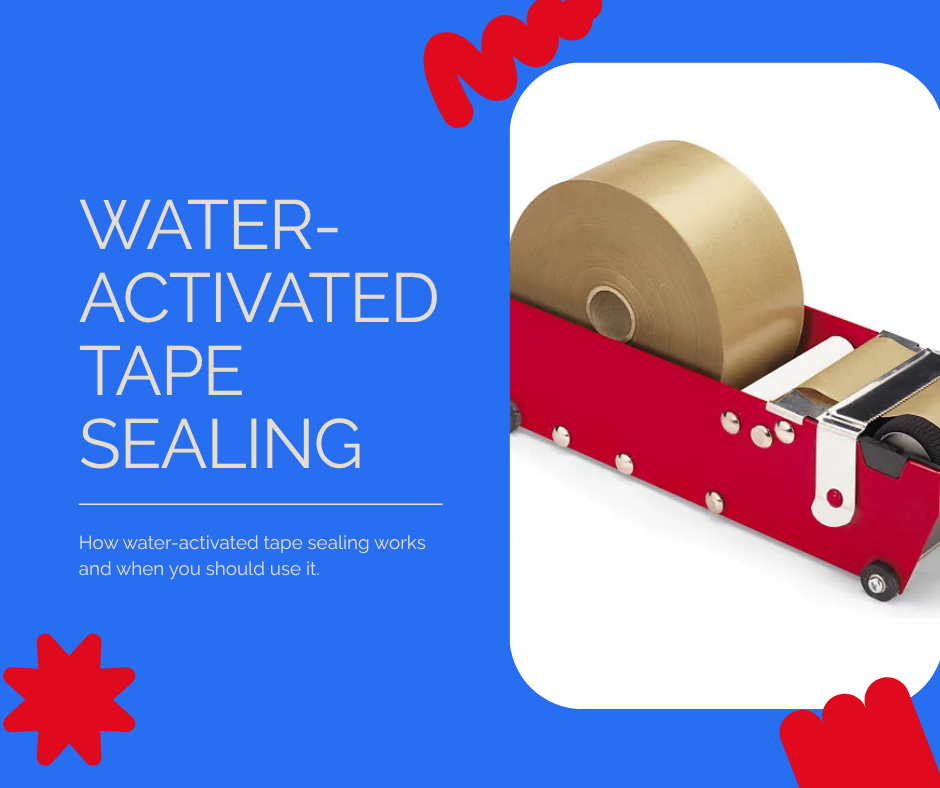
Water-activated tape sealing: how it works and when to choose it
10
min read26 May 2026








Water-activated tape (WAT), sometimes referred to as gummed paper tape or WAT, uses a starch-based adhesive that activates when moistened. Once applied, the tape bonds directly into the cardboard fibres of the box rather than sitting on the surface. This produces a structurally stronger seal than standard pressure-sensitive sealing and leaves visible damage if anyone tries to remove it.
This guide explains how the format works, how it compares to standard polypropylene options, and when it’s the right choice for your despatch operation.
In this guide, we’ll cover:
Gummed paper tape is made from a kraft paper backing with a dry, starch-based or vegetable adhesive on one face. The adhesive is inactive until water is applied. Once moistened, the starch activates and forms a bond with the paper fibres on the surface of the cardboard box. The result is a seal that becomes part of the board itself rather than an adhesive layer sitting on top of it.
It’s also called water activated tape, or WAT. ‘Gummed’ describes the dry adhesive face and ‘water activated’ describes the mechanism. You’ll see both terms interchangeably.
Two construction types are available. The standard Gummed Paper Tape 70gsm option uses a single layer of kraft paper which is also available in a FRAGILE Gummed Paper Tape format to alert couriers. The Reinforced Gummed Paper Tape 125gsm option adds glass fibre threads to the paper backing in a cross-hatch pattern. That reinforcement significantly increases tensile strength and tear resistance, making it the standard choice for heavy duty boxes and high-security despatch.
The starch-based compound is applied dry during manufacture. When the tape passes through a dispenser, which can be a manual water activated tape dispenser or electronic water activated tape dispener, a moistening bar or brush applies a measured amount of water to the adhesive face. The starch dissolves and becomes tacky within seconds.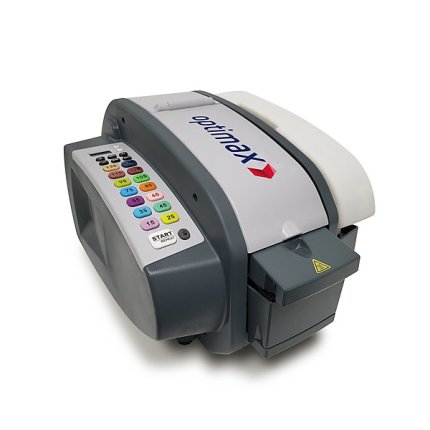
Press the moistened tape onto the box seam. As the starch dries, it forms a chemical bond with the fibres in the cardboard surface. This isn’t the same as pressure-sensitive adhesive, which grips by contact force. The gummed format bonds by integrating with the surface. The bond continues to strengthen over the first 30 to 60 minutes after application.
That bonding mechanism is the reason the format is tamper-evident. If someone attempts to remove the seal, they don’t peel it cleanly off the surface. Instead, they tear the cardboard, because the tape and the board have become one structure. The damage is immediately visible and can’t be concealed by reapplying.
Application requires a dispenser. Manual versions feed the tape across a moistening brush that the operator runs through the water tray. Electric versions are programmed to a set strip length: press a button and the machine feeds, moistens and cuts automatically. For high-volume operations sealing several hundred boxes per day, an electric dispenser reduces both application time and waste significantly.
In any comparison between the two formats, the key question is whether the bond sits on the surface or becomes part of it. Standard parcel tape options bond by adhesive contact with the surface. The gummed format bonds into the surface. On corrugated board, the fibre-level bond is meaningfully harder to break.
The following table summarises how the two formats compare across the decisions buyers usually face.
| Decision factor | Standard polypropylene | Water-activated paper |
| Seal strength on corrugated | Surface adhesion; can lift if box flexes or surface is dusty | Bonds into cardboard fibres; stronger on corrugated regardless of surface variation |
| Tamper evidence | Can be lifted and reapplied without obvious damage | Removal tears the cardboard; damage is visible |
| Application speed (manual) | Faster on a manual line — peel and press | Slower without a dispenser; comparable and improved with an electric one (model dependent) |
| Recyclability | Not kerbside recyclable; contaminates cardboard recycling bales | Fully recyclable with the box in standard paper streams |
| Equipment required | Standard tape gun | Manual or electric water-activated dispenser |
| Best for weight band | Up to 20kg standard, up to 30kg with reinforced variants | Standard format <20kg; reinforced rated >30kg |
Standard polypropylene relies on surface adhesion. If the box flexes under load in transit, or if the board surface is dusty or slightly damp, the seal can lift at the edges. The gummed format bonds into the board regardless of minor surface variation, because the water carries the adhesive into the cardboard fibres before it sets.
The reinforced 125gsm option goes further. The cross-hatch glass fibre threads in the backing resist tearing across multiple axes. It’s the right choice for boxes above 20kg, irregularly shaped cartons and any application where the tape needs to hold under sustained tension during stacking or transit. For comparable heavy-duty alternatives, see the industrial tapes range.
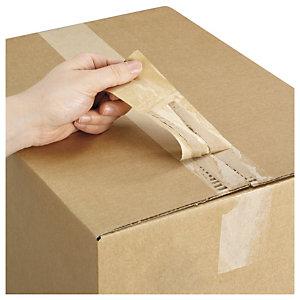
Pressure-sensitive options can be removed carefully and reapplied without obvious evidence of interference. The gummed format cannot. Any attempt to lift it tears the cardboard surface and leaves visible damage that can’t be hidden. For pharmaceuticals, electronics, subscription boxes and returns-heavy operations, this is a major advantage.
Pressure-sensitive options win on speed for manual application. Peel from the roll and press. The gummed format requires a dispenser and a water source. On a fast manual packing line without a dispenser, that adds a step. On a line equipped with an electric dispenser, application speed is comparable and consumption per box is typically lower.
Yes. The kraft paper backing and starch-based adhesive are both accepted in standard paper recycling streams. The seal doesn’t need to be removed before the box is flattened and collected. Standard polypropylene uses a plastic film backing that isn’t kerbside recyclable and contaminates cardboard recycling bales if left on the box. For comparable paper-based alternatives that don’t require a dispenser, see the kraft paper tape options.
For operations responding to Extended Producer Responsibility regulations, retailer packaging policies or customer expectations around sustainable despatch, switching removes a material compliance risk. The box and the tape go into the same recycling stream without any action required from the customer.
RAJAPACK holds an EcoVadis Gold sustainability rating, placing us in the top 5% of companies assessed across environmental, labour and procurement criteria.
The format makes practical sense for any of the following situations:
The water-activated format outperforms standard pressure-sensitive on seal strength, tamper evidence and recyclability. The trade-off is equipment: you need a dispenser and a water source, and the upfront cost is higher than a standard tape gun. For operations sealing high volumes, heavy boxes or goods where seal integrity is a commercial requirement, that investment is usually recovered quickly.
For lower volumes or standard ambient despatch where none of those factors apply, pressure-sensitive options are faster and simpler to start with. Whichever you choose, the right call becomes clear once you know your carton weights and your daily volume. The full packaging tape range covers both formats across the standard width and length specifications.
For more information, read our complete guide to adhesive tapes, which explores even more tape options.
Yes. The format requires a dispenser to moisten the adhesive before application. Manual dispensers use a brush and water tray and suit lower-volume packing. Electric versions feed, moisten and cut automatically to a preset length and are more practical for operations sealing more than 100 boxes per day.
No. Most brown parcel tape options are pressure-sensitive polypropylene. The water-activated format uses a starch-activated adhesive and a kraft paper backing. They look similar on a sealed box but use different bonding mechanisms and produce very different seal strengths on corrugated cardboard.
Yes. The kraft paper backing and starch-based adhesive are accepted in standard paper recycling streams, so the seal doesn’t need to be removed before the box is recycled.
Initial tack develops within seconds of application. Full bond strength builds over approximately 30 to 60 minutes as the starch dries and completes its integration with the cardboard fibres. Where possible, avoid stacking or compressing freshly sealed boxes until the bond has set.
For cartons above 20kg, irregularly shaped loads and applications where tensile strength matters, yes. The 125gsm reinforced option is rated for the above-30kg band, where the standard 70gsm format isn’t. For lighter loads in the up-to-20kg band, the standard option is adequate and more cost-effective.
The starch-based adhesive in the RAJAPACK range is rated for application from -10°C upward. Below that, water freezes during activation and the adhesive can’t bond properly. For cold-chain despatch operating below -10°C, check the product data sheet or consider an acrylic-adhesive alternative for the application step.