The complete guide to adhesive tapes: types, uses and how to choose
16
min read06 May 2026








Adhesive tapes cover a wider range of products than most buyers expect. The standard brown packing tape roll on the packing bench is one part of a vast and surprisingly complicated category. Paper-backed, water-activated, filament, double-sided, vinyl, masking and tamper-evident options all fall under the same umbrella, but each one is built for a different job and a different set of conditions.
This guide is written for B2B buyers, warehouse managers and procurement teams. It covers which type does what, how to specify correctly for your operation, and where to go in the RAJAPACK range to find the right roll at volume pricing. Detail on individual specifications, comparisons and product selection lives on the dedicated category pages and buying guides linked throughout.
In this guide, we’ll cover:
Adhesive tape refers to all pressure-sensitive products used to seal, secure, protect or mark packaging and goods. The category divides into a small number of main types, each with a distinct construction and purpose. Knowing what does what before you order avoids the most common and costly errors. The summary below routes by type; click through to the dedicated category page for the full specification.
| Type | Backing | Best for | Category |
| Polypropylene | BOPP plastic film | Default box sealing across most despatch volumes | Polypropylene |
| Self-adhesive paper | Kraft paper | Recyclable box sealing where the box goes kerbside | Self-adhesive paper |
| Water-activated paper | Kraft paper (starch adhesive) | Tamper-evident, recyclable, structurally stronger seal | Gummed tape & dispensers |
| Industrial / filament | Polypropylene with glass fibres | Bundling, strapping, heavy-load box reinforcement | Industrial |
| Masking | Crepe paper | Temporary surface protection during a process | Masking |
| Double-sided | Foam, tissue, film or cloth carrier | Bonding two surfaces with no visible seal | Double-sided |
| Vinyl / coloured | Soft PVC | Colour coding, lane marking, electrical insulation | Vinyl coloured |
| Tamper-evident / warning | Polyester or polypropylene | Security seals, FRAGILE warnings, audit trails | Warning printed |
| Custom printed | Polypropylene, paper or cloth | Branded sealing with logo or message | Custom printed |
Polypropylene is the default for box sealing in most despatch and warehouse operations. The film backing pairs with either a hot melt or acrylic adhesive, and the same construction is available in clear and brown finishes, with the colour being the only difference. See the full polypropylene tape for the available specifications.
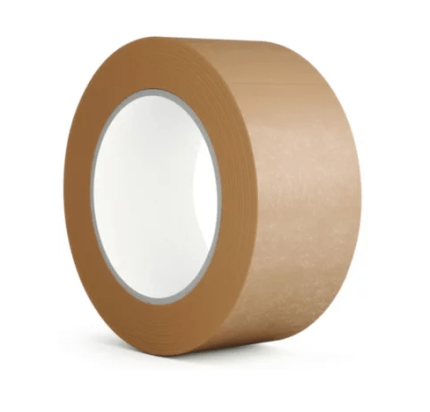
Paper-backed sealing uses a kraft paper carrier with a natural rubber adhesive on most standard products and hot melt on heavier grades. It recycles cleanly with the corrugated box, which makes it the right call for operations with sustainability commitments or retail customers requiring recyclable packaging. Reinforced variants with glass fibre reinforcement or heavier kraft are available for carton loads over 30kg. See the full paper tape range for options.
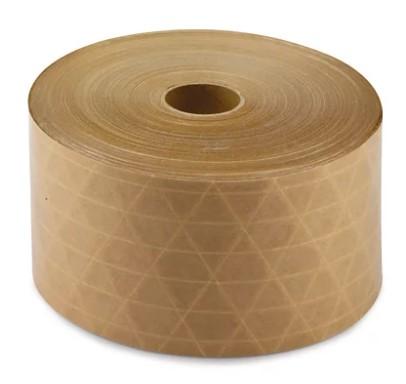
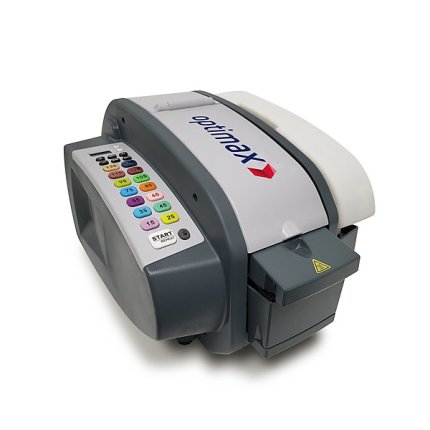
Water-activated tape (WAT) paper has a starch-based adhesive on one face that activates when moistened. Once applied, it bonds into the cardboard fibres rather than sitting on the surface. That fibre-level bond makes it structurally stronger than pressure-sensitive options on corrugated board, with the added benefit of being tamper-evident; any attempt to remove it tears the box surface. A water-activated dispenser is required for application. See the gummed paper tape for standard and reinforced grades.
Filament construction embeds continuous glass fibre strands in a polypropylene film backing, giving high tensile strength along the line of the fibres. It’s used for bundling long goods, strapping palletised loads and reinforcing box bases under heavy stacking compression. The industrial tape range covers filament, reinforced and heavy-duty options together.
Masking uses a crepe paper backing with a low-to-medium tack rubber adhesive, designed to hold temporarily, protect a surface during a process and release cleanly without residue. See the masking tape range.
Double-sided products carry adhesive on both faces with a release liner between them. They bond two surfaces together with nothing visible from the outside. Sub-types vary by carrier, such as foam, tissue, film and cloth, with each suited to a different bonding job. See the double-sided tape range.
Vinyl uses a soft PVC backing with a natural rubber adhesive. The thicker film and stronger pigmentation make it the right choice for colour-coded sortation, lane marking on shelving, electrical insulation and any application where the tape needs to flex with the surface. Coloured polypropylene variants sit alongside it for high-visibility sealing where vinyl’s flex isn’t needed. See the vinyl and coloured tapes range.
Tamper-evident leaves a visible ‘VOID’ message or pattern on the surface if removed and reapplied. The standard option is the 25 micron polyester construction. The wider warning printed range also includes pre-printed FRAGILE on polypropylene, paper and water-activated backings, plus Quality Control printed vinyl for audit-trail use. See the full warning printed range.
Branded products are available with your logo, colours and messaging printed directly on standard polypropylene, paper or cloth backings. Every sealed carton becomes a brand touchpoint from packing station to doorstep, and the printed surface acts as a tamper deterrent. See the custom printed tapes.
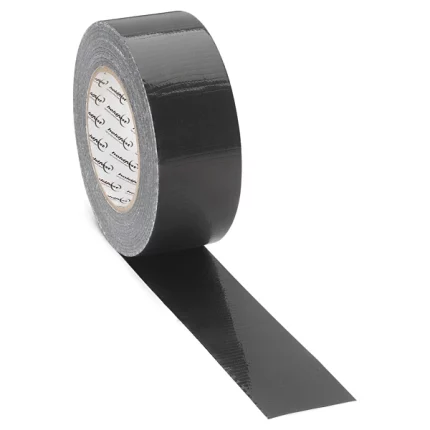
Several other types are used in warehouse and industrial settings for specific jobs rather than general box sealing. Gaffer (woven cloth, hand-tearable, used in events and rigging), duct (polyethylene-coated cloth) and floor marking (heavy-duty PVC or polyester rated for traffic loads) each sit in their own product categories outside the standard packaging tape range. See the relevant category pages for the full specifications.
Specifying correctly comes down to seven honest answers about your operation. Get them right, and you avoid the seal failures, sticky residue and compliance issues that come from under-specifying.
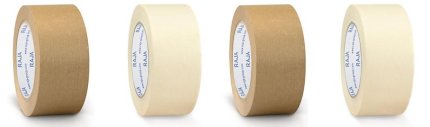
Several types are chosen by application rather than by carton weight or temperature. Using the wrong one can damage surfaces, fail to hold or create a compliance risk. The main specialist categories used in warehouse and industrial settings are below.
Masking uses a crepe paper backing with a low-to-medium tack rubber adhesive, designed to hold temporarily, protect a surface during a process and release cleanly without residue.
Gaffer is a woven cloth tape with a strong rubber adhesive that grips on difficult surfaces, including concrete, brick and metal. It’s not duct tape; gaffer tape is made to tear cleanly by hand and is designed for the entertainment and events industry. Sits outside the standard tape category; check the relevant category page for available specifications.
Duct uses a polyethylene-coated cloth backing with a rubber-based adhesive. Sits outside the box-sealing category; check the relevant category page for available specifications.
Floor marking is a heavy-duty product designed to cope with foot traffic and forklift wheels. It’s used to mark aisle boundaries, safety zones, hazard areas and storage locations on warehouse floors. Standard sealing and masking tapes lift under traffic within hours and aren’t suited to the floor.
Colour standards for floor markings in UK warehouses follow guidance from the HSE and ISO 11684: yellow typically marks pedestrian routes and traffic lanes, red marks fire equipment and hazard zones, and white marks storage locations. Floor marking sits outside the box-sealing category; see the relevant category page for full specification.
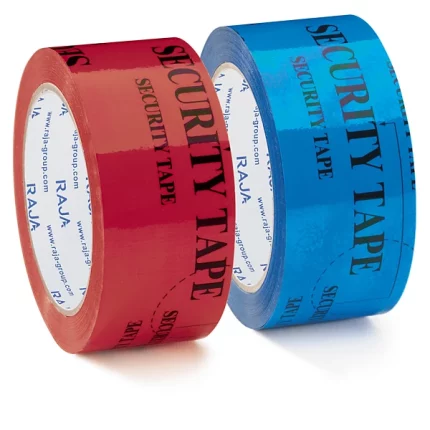
Tamper-evident sealing leaves a visible message or pattern on the surface if removed and reapplied. The most common format is void tape, which leaves a ‘VOID’ pattern on both the tape and the surface when peeled. Our tamper-evident tape is made with acrylic adhesive and is the standard choice for pharmaceutical, electronics and premium e-commerce dispatch.
Tape used on consignments classified as dangerous goods under ADR regulations must meet specific requirements for seal integrity and compatibility with the outer packaging type. Standard polypropylene is acceptable for many outer packaging configurations, but the specific requirements depend on the UN packaging code, the packing group and the mode of transport. Sits outside the standard sealing category for compliance reasons; check the dangerous goods packaging category for specifications meeting ADR requirements.
Identifying the right type is the first part of the job. The second is applying it correctly. Width, core size and dispenser choice all influence seal performance and cost per box.
 The H-tape method is the standard for sealing cartons: one strip along the centre seam and one strip folded down each end, creating three seals rather than one. This distributes the sealing load across a larger area and substantially reduces the chance of the box opening under compression or in transit. Applying on a clean, dry surface above 15°C is the minimum condition for a reliable bond with hot melt adhesive.
Common application errors include taping dusty or damp surfaces, applying below the minimum application temperature and using a single centre strip on boxes above 10kg. For a full guide to techniques (H-tape, U-shape, reinforced and heavy-duty) and common errors, read our tape application guide.
Width affects both seal strength and application speed. A wider option creates a larger bonded area, which improves seal integrity on larger cartons and heavier goods. Standard widths in the range are 48mm and 75mm; 25mm and 50mm are available on specific products. For heavy boxes or operations sealing large double-wall cartons, 75mm provides a wider seal without requiring multiple strips.
Core size determines dispenser compatibility. The standard core is 76mm (3 inches) internal diameter, which fits most hand-held units and table-top machines. Some industrial dispensers use 150mm cores for larger roll volumes.
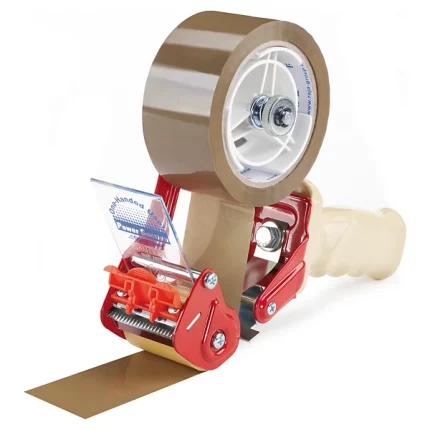
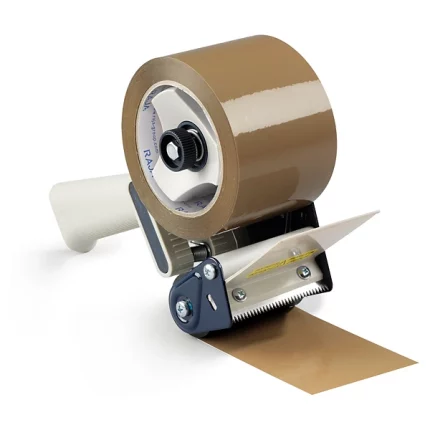
Loading the roll correctly and setting the blade tension are the two variables that determine whether you get a clean cut or a torn end and a wasted strip. A correctly loaded gun feeds smoothly, holds tension under the blade and cuts on a controlled forward motion against the carton edge.
Browse the full tape dispenser range (hand-held, table-top and machine) for available models.
Consumption is driven by three things:
Operations applying manually and without a consistent method use more per box than operations using a calibrated auto-dispenser set to the correct length. Reducing consumption doesn’t mean applying less than is needed for a secure seal; it means eliminating waste without compromising integrity.
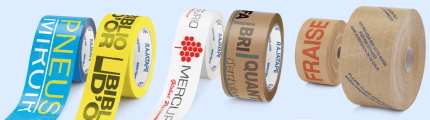
Branded sealing is available with your logo, colours and messaging printed directly on standard polypropylene, paper or cloth backings. Every sealed carton becomes a brand touchpoint from packing station to doorstep, and the printed surface acts as a tamper deterrent. Minimum order quantities, lead times and artwork specification (including Pantone colour references and vector file requirements) are covered in detail in the custom printed tape range.
RAJAPACK supplies tape to B2B buyers on account, with pricing structured by volume. Standard catalogue pricing applies to single-unit and low-volume orders. Account holders ordering consistently above volume thresholds access lower per-roll pricing. Standard lines are available on next-working-day delivery for orders placed before the daily cut-off.
The most effective way to reduce spend is to specify correctly before committing to volume. Over-specifying wastes money on capabilities you don’t need. Under-specifying creates seal failures that cost more in repacking and damage claims than the savings on the roll price. The key variables are tensile rating, adhesive type and minimum application temperature.
Opening a RAJAPACK business account gives access to volume pricing, consolidated invoicing, credit terms and a dedicated account team, as well as eprocurement options if needed.
If you’re not sure which is right for a specific job, our decision guide covers every common packaging and workplace scenario in a single reference. It routes by application (box sealing, bundling, surface protection, floor marking and security sealing) and gives a direct recommendation for each.
Tape is a consumable that most businesses miscalculate. The failures it causes show up elsewhere in the budget: repackaging costs, damage claims, cold-store seal failures and recycling compliance issues. Matching the type to the application, the adhesive to the temperature range and the strength to the carton weight removes those failure points.
Browse the full packing tape range and filter by type, width, adhesive and load rating to find the right specification for your operation.
If your packing area and transit conditions stay between 15°C and 25°C and goods are despatched within 48 hours, hot melt is cost-effective and performs well. If boxes go into cold storage, face outdoor conditions, sit in stock for weeks before despatch or pass through temperature-variable supply chains, acrylic is the more suitable option. The starch-based vegetable adhesive on water-activated paper is also worth considering for cold-chain operations, since starch doesn’t degrade over time the way rubber-based adhesives do. For a full comparison, see our hot melt vs acrylic guide.
Heavy duty boxes need a higher-rated specification than standard polypropylene: a reinforced gummed tape or filament option from the industrial range, depending on the seal pattern and load. Always seal both top and base seams using the H-tape method (or the heavy-duty method with a circumferential wrap for above-30kg loads).
Yes. Floor marking uses a polyester or vinyl backing with a strong adhesive rated for floor surfaces and traffic loads. Standard sealing tape lifts from smooth floor surfaces quickly under foot traffic or forklift wheels and isn’t suitable for floor marking.