
Shredded paper recycling: what businesses should do with it
7 min read 23 November 2026








Shredded paper recycling is possible, but shredding shortens the paper fibres and makes the paper harder to sort, so it can’t always go in the same bin as whole sheets. For businesses, the reliable routes are a confidential waste collection, a separate paper stream your waste contractor accepts, or reuse. This guide covers each option, explains why shredded paper causes problems and shows when it’s safe to reuse.
In this article, we’ll cover:
Shredded paper recycling works through collections that expect shredded material, such as confidential waste services. So yes, shredded paper is recyclable, but not every collection accepts it. The paper itself is fine; the problem is the size of the pieces and how recycling plants sort them.
The answer to whether shredded paper is recyclable depends on who collects it. Commercial waste contractors and confidential waste services handle it routinely. Mixed recycling collections are more likely to refuse it, because loose strips cause problems further down the line.
Shredded strips are too small for the screens at many recycling facilities to separate from other materials. They slip through with glass and plastics, contaminating those streams and reducing the paper that reaches the mill.
So if you’ve wondered why you can’t recycle shredded paper in your usual bin, sorting is the main reason. Shredding also shortens the paper fibres. Mills can still pulp short fibres, but they produce weaker recycled paper than long ones.
The simplest way for businesses to dispose of shredded paper in the UK is through a confidential waste or paper recycling collection. These services expect shredded material and bale it separately from mixed recycling.
If you’re working out how to dispose of shredded paper in the UK for a smaller office, ask your waste contractor first. Many accept shredded paper in a dedicated sack or a sealed paper bag inside the paper collection. Loose shreds tipped into a mixed recycling bin are the most likely to be rejected.
At home, the bin shredded paper goes in depends on your local council. Some councils ask for it bagged in the paper recycling, some want it in garden or food waste, and some prefer it in general waste.
Check your council’s website before you put shredded paper in the recycling bin. The guidance is usually listed under paper and card or under compostable waste.
Knowing what to do with shredded paper on site can cut collection costs. If you’d rather not send it away, there are practical uses for shredded paper. The most common are composting, animal bedding and, for non-confidential paper only, filling space in your own internal packaging.
Shredded paper works well in compost as a source of carbon, balancing wetter green waste such as grass cuttings. It’s also widely used as bedding for small animals, although you should leave out glossy or heavily printed paper.
For internal moves, non-confidential shredded paper can fill gaps in boxes going between your own sites. It’s soft enough to stop items rattling, although it compresses quickly and offers little real cushioning.
No, office shredding shouldn’t go into customer parcels or gift hampers. Even cross-cut documents can reveal names, figures or account details, and strips from strip-cut shredders can be pieced back together.
There are practical reasons too. Office paper is often printed with toner that rubs off onto products, and white strips look untidy in a gift presentation. Shredded office paper also packs down flat, so goods can shift during delivery.
Purpose-made packing paper solves all three problems. Shredded paper packaging such as Natural Crinkle-Cut Shredded Paper is cut in a zigzag so it springs back and holds products in place. For gift boxes and branded parcels, coloured shredded paper adds a finish that matches your packaging.
As a starting point, allow around 50g of crinkle-cut shredded paper for a small hamper, 100g for a medium one and 200g or more for a large basket. The exact amount depends on the hamper’s depth and how much of the base your products cover.
Work out how much shredded paper to fill a hamper by packing one first and weighing what you used. That single test gives your team a reliable figure for every hamper of the same size.
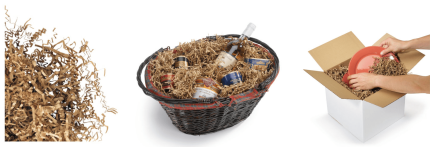
Good hamper filling with shredded paper starts with a firm base, not a loose top layer. Pack a dense layer into the bottom of the basket first, so the heaviest products sit level and don’t sink.
Place the tallest items at the back and work forward, tucking more shredded paper for hamper gaps between products as you go. Finish with a light top layer for presentation.
For hampers with a natural look, wood wool gift packaging is an alternative to paper. It’s supplied as a 10kg bale, which suits businesses assembling hampers in volume.
If food sits directly on the fill, check that your hamper shredded paper is suitable for food contact. Wrapped and sealed products don’t need food-contact fill, but loose items such as fruit do.
Shredded paper recycling works when it goes through the right collection, and office shredding should never be reused in anything a customer receives. Use a confidential waste service for documents and purpose-made shredded paper for packing.
For businesses assembling hampers or gift boxes, that switch also gives a better finish and a more consistent fill weight.
Our loose fill range includes natural and coloured crinkle-cut shredded paper, wood wool and other materials for hampers, gift boxes and e-commerce parcels.
Yes, you can compost shredded paper, and it adds useful carbon to compost heaps that contain a lot of green waste. Avoid glossy or laminated paper.
Only if your waste contractor confirms they accept it, ideally bagged so strips don’t spread through other materials. If in doubt, don’t put shredded paper in recycling until you’ve checked.
Only shred paper that contains confidential information. Whole sheets are easier to sort and produce stronger recycled paper.
Cross-cut shredding is far more secure than strip-cut, but highly sensitive documents are often sent to a specialist confidential waste service. These services provide certificates of destruction.
Coloured shredded paper can fade if it sits in strong sunlight for long periods. Store it in a closed box away from windows.
Keep it in a dry place in its original bag or a lidded tub. Damp shredded paper loses its spring and can mark products.