How to choose the right tape for your boxes: a buyer’s guide by weight, environment and recyclability
8
min read15 May 2026








Choosing the right tape for your operation is a specification question rather than a brand question. The wrong choice costs you in failed seals, wasted rolls and repacking time. This guide routes you to the right specification using three practical factors: how much your boxes weigh, the environment they’ll be stored or shipped in, and whether recyclability is a requirement for your operation.
In this guide, we’ll cover:
Box weight is the starting point for any tape decision. A tape rated for a 20kg load will fail on a 30kg box, no matter how carefully it’s applied. The RAJAPACK range is rated against three weight bands: up to 20kg, up to 30kg, and above 30kg.
Polypropylene is the default for e-commerce and general despatch and is the largest single material category in the range. It suits single wall boxes carrying goods up to 20kg, applied correctly using the H-tape method. The dominant width is 48mm, with 75mm available for wider seams or heavier loads. Standard roll lengths are 50m and 66m for hand application, with longer 990m rolls available for automatic case sealers.
For loads up to 30kg, choose a heavy-duty polypropylene or a reinforced option. Reinforced kraft tape and cross-woven filament options embed fibres into the backing, which makes them resist tearing and stretch under load. These sit in the up-to-30kg band and are widely used for double-walled boxes and consolidated despatch.
Above 30kg, you’re in the heavy-duty bracket. Cross-woven filament options and reinforced paper options are rated for these loads. For very heavy or palletised goods, strapping tape handles loads that standard box-sealing options aren’t designed for. For more information, read our complete guide to adhesive tapes.
Temperature and moisture affect adhesive performance. A tape that works perfectly in a 20°C warehouse may lift, peel or refuse to bond in a cold store or an outdoor yard. The RAJAPACK range covers four adhesive types with different temperature profiles: hot melt, acrylic, natural rubber and starch-based vegetable adhesive (used on water-activated paper tape).
This covers the majority of UK warehouse and despatch operations. Hot melt and natural rubber adhesives both perform well in this range and are cost-effective for high-volume ambient lines. Most products in the range are rated for application from 15°C upward, so check the minimum application temperature on the product data sheet against your warehouse conditions, especially in winter.
Hot melt and standard natural rubber adhesives in the range are rated for application at 15°C minimum. Below that, they lose tack and may not bond to cold box surfaces. For cold stores, chilled distribution and frozen goods operations, choose an acrylic or vegetable based adhesive. Most acrylic options in the range are rated to -5°C, with specialist products rated as low as -30°C for deep-freeze applications. Gummed paper tape also works well in cold environments, as the adhesive is water activated. Check the product data sheet for the minimum application temperature before ordering.
UV exposure degrades hot melt and natural rubber adhesives over time, causing yellowing and loss of tack. For outdoor storage, garden product distribution or goods sitting in loading bays, an acrylic adhesive is the more reliable choice. It’s also the standard option for operations where boxes pass through significant temperature variation in transit. The maximum hold temperature for acrylic products in the range is 60°C to 80°C depending on the spec.
Paper-backed options perform well in moderate outdoor conditions and are often used in horticulture and garden product fulfilment. However, they aren’t suited to sustained wet exposure, so check application conditions before outdoor use.
 If recyclability is a requirement, material matters as much as adhesive type. Not all options are equally recyclable, and some actively contaminate cardboard recycling streams.
Standard polypropylene isn’t kerbside recyclable and shouldn’t go into cardboard recycling bales. The film contaminates the paper pulp during the recycling process, which can cause bale rejection. RAJAPACK does offer a recyclable parcel tape option made from recycled polypropylene, which is the right choice if you want to keep the speed and cost profile of a plastic film but reduce virgin material use.
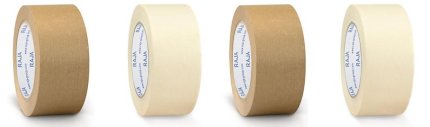
Kraft packing tape and self-adhesive paper options are the most recycling-friendly choices for cardboard boxes in standard sealing applications. They can be recycled with the box, since both are paper-based and processed together. Reinforced kraft variants add tensile strength for heavier loads while keeping the recyclability profile intact.
Water-activated tape, sometimes called gummed paper tape, is the most sustainable sealing option available. It uses a starch-based vegetable adhesive that bonds directly to the cardboard fibres, and the finished seal is fully recyclable with the box. It’s also tamper-evident, since removal damages the box surface. The trade-off is that it requires a dispenser and a water source close by.
Match the operational scenario to the recommended specification. For mixed operations, prioritise by the dominant despatch profile.
| Scenario | Weight band | Recommended specification |
| Standard ambient despatch (no recyclability requirement) | Up to 20kg | Polypropylene with hot melt adhesive, 48mm × 66m |
| Standard ambient despatch with recyclability requirement | Up to 20kg | Kraft or self-adhesive paper options |
| Cold storage or chilled despatch | Up to 30kg | Polypropylene or gummed, rated below 0°C |
| Heavy ambient despatch | Up to 30kg | Reinforced kraft or heavy-duty polypropylene |
| Very heavy or palletised goods | Above 30kg | Cross-woven filament or strapping options |
| Highest sustainability standard | Any | Water-activated paper with dispenser |
| Coloured marking, lane separation, identification | Any | PVC vinyl across the standard width range |
For more on coloured tape applications and the full PVC range, see the PVC vinyl tape category. You can also read our full guide to adhesive tapes, which explores each type of tape in detail.
Three questions will get you to the right spec. What’s the maximum weight of a fully packed box? What temperature range will the tape be applied and stored in? Does your operation or your customers’ recycling infrastructure require a recyclable option?
Once you’ve answered those, use the RAJAPACK tape range to match the specification to your operation. If your requirements are complex or you’re ordering at volume, the RAJAPACK team can recommend by spec, so feel free to get in touch today.
Cross-woven filament options and reinforced kraft and gummed are rated for the above-30kg band in the RAJAPACK range. Filament backing embeds glass or polyester fibres to resist tearing under load. For boxes above 30kg, specify from the heavy-duty bracket rather than relying on standard polypropylene.
Standard polypropylene with a hot melt adhesive isn’t suited to cold store environments. The hot melt and natural rubber adhesives in the range are rated for 15°C minimum application; below that, the adhesive loses tack and may not bond to cold box surfaces. Choose acrylic adhesive for cold storage, chilled distribution and frozen goods operations or gummed paper, which has a vegetable based adhesive which is activated with a WAT dispenser.
Yes. Polypropylene contaminates cardboard recycling bales and isn’t accepted in kerbside recycling. Kraft and self-adhesive paper options, along with water-activated variants, can be recycled with the cardboard box. If your boxes go into kerbside or industrial paper recycling, choose a paper-based option.
‘Kerbside recyclable’ means the product can be placed in standard local authority paper or cardboard recycling collections without being separated first. Paper-based options qualify because they process with the cardboard. Polypropylene doesn’t qualify because the plastic film requires a separate recycling stream.
The H-tape method is a box-sealing technique where tape is applied along the centre seam and then folded down both sides to form an H shape. It distributes the seal across three strips rather than one, which significantly improves resistance to the box opening under load and vibration.