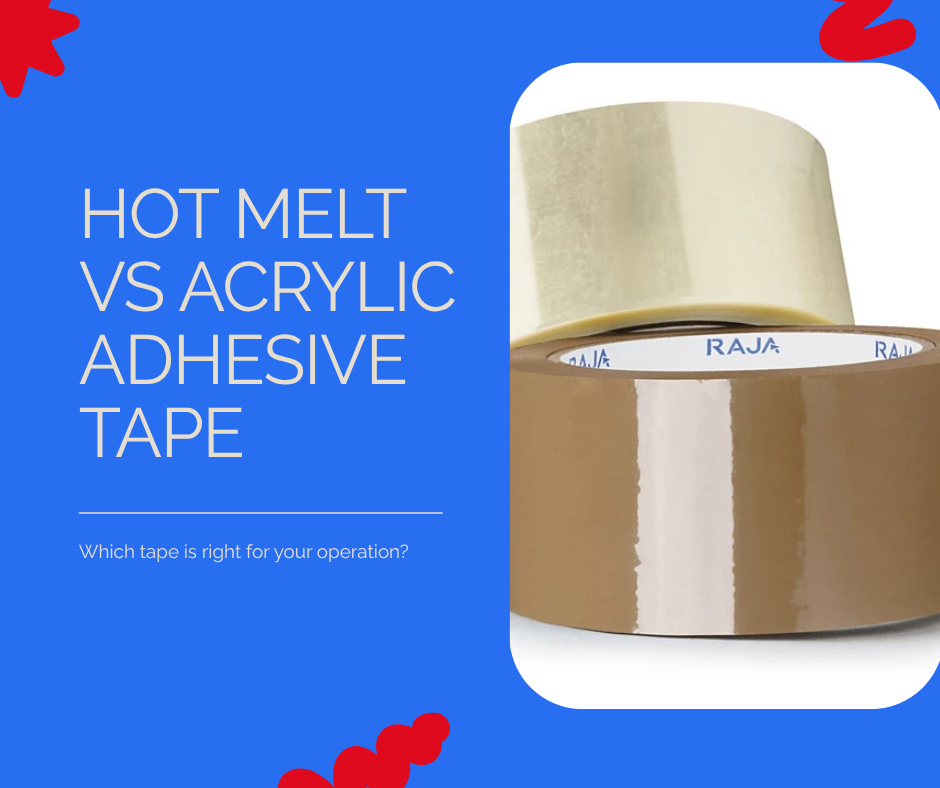
Hot melt vs acrylic adhesive tape: which is right for your operation?
13
min read12 May 2026








Hot melt and acrylic are the two main pressure-sensitive adhesives used for box sealing on polypropylene. They behave differently from the moment they’re applied. Those differences matter when you’re sealing hundreds of boxes a day in varied conditions. Choose the wrong adhesive type and you’ll get failed bonds in cold stores, degraded tape in warm despatch areas and higher cost per box over time.
There are four adhesive categories in the RAJAPACK range overall. This guide covers the two pressure-sensitive choices most operations decide between (hot melt and acrylic) plus natural rubber as the third pressure-sensitive option, used predominantly on PVC vinyl and kraft paper. The fourth category, starch-based vegetable adhesive, is used exclusively on water-activated paper sealing and works by a different mechanism; see our water-activated paper guide.
In this article, we’ll cover:
Hot melt is a pressure-sensitive adhesive based on a rubber compound, applied at high temperature during manufacture. It bonds quickly on contact, which makes it the go-to choice for fast, high-volume packing lines sealing standard cardboard boxes at ambient temperatures. Most standard polypropylene tape in the RAJAPACK range use hot melt as the default adhesive type. Press it down and it grips almost immediately. That high initial tack is one of its defining characteristics.
The trade-off is temperature. Hot melt products in the RAJAPACK range are rated for application from 15°C upward. Below that, the adhesive loses tack and may not bond reliably to a cold box surface. Maximum hold temperatures vary across the range, with most products rated to 60°C and some lower-grade options rated to 25°C. In despatch areas exposed to direct sun or in transit vehicles during summer, hot melt can soften and lose seal integrity.
A note on terminology: ‘hot melt’ in the range covers two sub-grades. Standard hot melt is the rubber-based version applied to most polypropylene options. Artificial hot melt rubber is the synthetic version used on filament constructions and on the heavier reinforced kraft options where higher cohesive strength is needed. The two share the same temperature profile and instant-tack behaviour; the difference matters mainly when you’re matching a specific data sheet to a load-rated spec.
Acrylic is a pressure-sensitive adhesive based on an acrylic polymer. Unlike hot melt, it builds full bond strength over 24 to 72 hours after application – a process generally referred to as bond maturation. Initial tack is lower than hot melt, but the long-term bond is significantly stronger and more stable once it’s fully cured. 
Acrylic options in the RAJAPACK range hold reliably from -5°C upward in standard products, with specialist options rated as low as -30°C for deep-freeze applications. Maximum hold temperatures are 60°C in standard products and 80°C in specialist grades. That makes it the right choice for cold chain logistics, outdoor storage and any operation where boxes face significant temperature variation. It’s also UV-resistant, so it won’t yellow or degrade in natural light over time.
Acrylic also tends to be quieter when unrolled, which makes it a reliable low-noise option. If noise levels matter in your packing area (for example, in fulfilment operations near office or customer service teams), it’s worth factoring in.
Natural rubber is the third adhesive type in the RAJAPACK range and the single largest adhesive category by product count. It’s used predominantly on vinyl packing tape and on kraft paper sealing. Natural rubber sits between hot melt and acrylic on initial tack and has a temperature profile similar to hot melt; most products are rated for 15°C minimum application, with maximum hold up to 65°C. It isn’t the standard choice for box sealing on polypropylene; if your application is on a coloured PVC backing or a kraft paper backing, you’ll most likely be specifying natural rubber by default.
Starch-based vegetable is the fourth adhesive category in the range, used exclusively on water activated tape (WAT). It’s not pressure-sensitive: the dry adhesive face activates when moistened with water, then bonds directly into the cardboard fibres rather than sitting on the surface. Because it works by a different mechanism, it isn’t directly comparable to the three pressure-sensitive options on tack and instant grip. The standard products are rated for application from -10°C to 40°C.
If your decision is between specifying water-activated paper or specifying a pressure-sensitive option, the choice is mostly about tamper evidence, recyclability and dispenser equipment rather than adhesive performance per se.
The comparison below covers the three pressure-sensitive adhesives, since they’re directly comparable on tack and temperature. Starch-based vegetable sits outside this comparison because it works by water activation rather than pressure-sensitive contact.
| Factor | Hot melt | Acrylic | Natural rubber |
| Initial tack | High – grips on contact | Lower – needs application pressure | Medium-high |
| Full bond strength | Reached on contact | 24-72 hours after application | Reached on contact |
| Min application temp | 15°C | -5°C standard, -30°C specialist | 10°C to 15°C |
| Max hold temp | 25°C to 60°C depending on grade | 60°C standard, 80°C specialist | 60°C to 65°C |
| UV stability | Yellows over time | UV-resistant, holds appearance | Variable – check data sheet |
| Best for | Fast ambient packing lines, quick despatch | Cold storage, long-term bond, temperature variation | PVC vinyl and kraft paper applications |
| Common backing | Polypropylene | Polypropylene, kraft paper | PVC, kraft paper |
| Roll noise | Higher | Lower | Variable |
Acrylic is the right choice for any application involving cold storage, chilled transport or elevated heat. Hot melt isn’t rated for sustained use outside the 15°C to 60°C range covered by the RAJAPACK products.
In chilled warehouses, typically 2°C to 8°C, and in frozen storage below -18°C, hot melt loses tack and the seal can lift from the box surface. Acrylic stays flexible and grippy at these temperatures, maintaining a reliable bond on cardboard and corrugated board.
Minimum application temperature matters too. Hot melt products in the range are rated for 15°C minimum; below that, the adhesive won’t bond effectively to a cold surface. Standard acrylic products are rated to -5°C for application, with specialist options rated lower for deep-freeze use. Always check the product data sheet for the precise temperature range before specifying for cold-chain operations.
Above 60°C, standard hot melt softens and the bond can fail. Despatch areas near loading bays in summer, vehicles that heat up in transit or areas near processing equipment all present this risk. Standard acrylic holds to 60°C and specialist grades hold to 80°C, making acrylic the reliable choice wherever heat is a factor.
If your operation needs the seal to hold immediately on a fast packing line, hot melt is the better fit. Its high initial tack means you don’t need to apply pressure for long to get a working bond.
If your boxes sit in storage for more than a week, or go through multiple handling stages before delivery, acrylic gives better protection against seal failure. The 24- to 72-hour cure time means consistent application pressure matters, but the payoff is a bond that doesn’t creep or lift over time.
For mixed operations, where most goods are despatched within 48 hours but some go into longer storage, running a single acrylic specification across all lines is often the simpler approach. You pay a small cost premium, but you avoid juggling two adhesive types.
Choose the right adhesive by answering two questions: what temperatures will the seal face, and how long will boxes sit before despatch?
Most standard polypropylene options in the packing tape range use hot melt. If you’re sealing standard single wall or double wall boxes for next-day or two-day despatch at ambient temperatures, hot melt will do the job reliably and cost-effectively.
Acrylic is common in food and pharmaceutical cold chain, outdoor and garden product distribution, and any operation where goods move through a temperature-variable supply chain. It’s also the standard choice for archival storage.
For more info, read our complete guide to adhesive tapes.
Some operations run both adhesive types: hot melt for standard ambient despatch and acrylic for cold chain or longer-term storage lines. This makes sense if your product mix genuinely spans both scenarios. Running a single acrylic specification across the whole operation also works. You trade a small cost premium for a simpler, more consistent packing process.
Hot melt is the cost-effective, high-tack choice for standard ambient packing where goods move quickly. Acrylic is the durable, temperature-stable choice for cold storage, long-term bond requirements and operations with significant temperature variation. Natural rubber is the default on PVC vinyl and kraft paper backings rather than a standalone choice. Starch-based vegetable adhesive sits outside this list because it’s water-activated rather than pressure-sensitive; specify it via the water-activated paper category if tamper evidence or recyclability is the priority.
Before you order, check two things: the temperature range your seal will face, and how long your boxes typically sit before despatch. Those two answers will tell you which adhesive is right.
For an even deeper look at tapes, read our complete guide to adhesive tapes.
Hot melt refers to the manufacturing process: a rubber compound is heated to a liquid state and applied to the backing. The result is a pressure-sensitive adhesive with high initial tack that bonds on contact at room temperature.
No. Hot melt loses tack and seal integrity in cold storage and freezer environments. The hot melt products in the RAJAPACK range are rated for 15°C minimum application; below that, the adhesive won’t bond reliably. Choose acrylic for any operation below 15°C.
Acrylic has a stronger long-term bond once fully cured (24 to 72 hours after application). Hot melt has higher initial tack and grips faster on contact. Which is ‘stronger’ depends on whether you need immediate hold or lasting bond over time.
Lifting is usually caused by one of three things: temperature, surface condition or adhesive type. The seal may have been applied too cold, the box surface may have been dusty or damp, or the adhesive isn’t suited to the storage conditions. Switching to acrylic often resolves the issue.
Hot melt products in the range are rated for 15°C to 60°C application and hold. Acrylic products are rated from -5°C to 60°C in standard grades, with specialist options extending to -30°C minimum and 80°C maximum. Always check the specific product data sheet for exact ratings.
Yes. Hot melt yellows and the adhesive can dry out when exposed to UV light over time, reducing bond life. Acrylic is UV-resistant and maintains its properties and appearance in storage environments with natural light.
Acrylic is generally quieter on the roll. The rubber-based adhesive in hot melt produces more noise when unspooled. If noise levels in your packing environment matter, acrylic is the lower-noise option.
Check the product data sheet or specification on the supplier’s website. The adhesive type will be listed alongside the temperature range and other specifications. RAJAPACK lists adhesive type on all product pages.