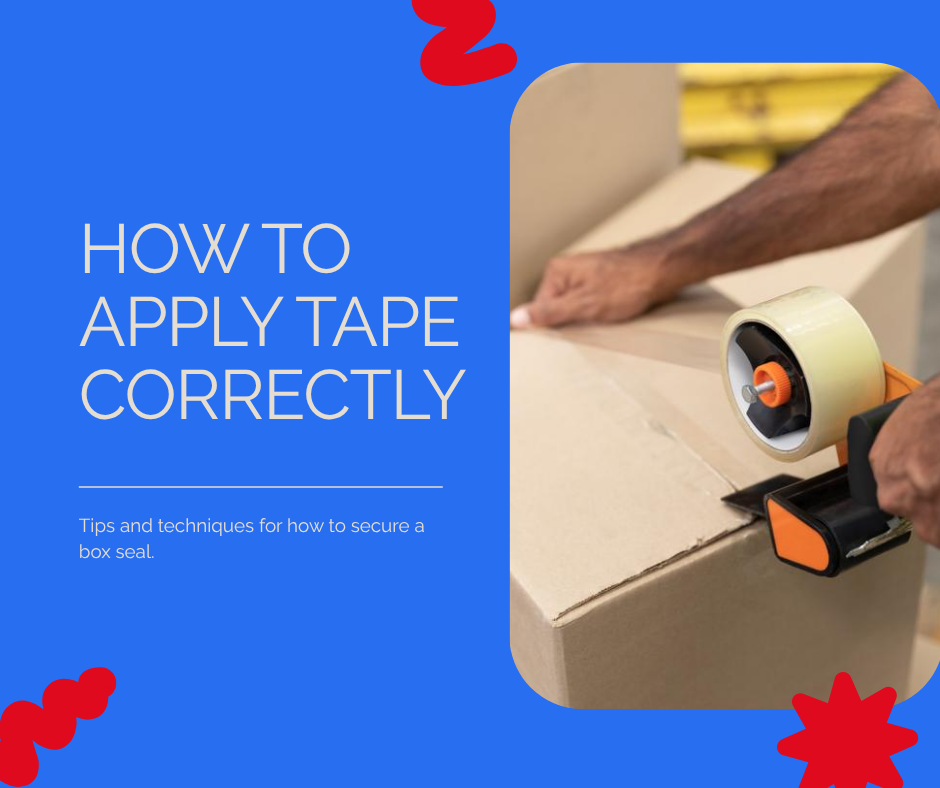
How to apply tape correctly: techniques for a secure box seal
8
min read19 May 2026








Applying box sealing tape correctly comes down to two things: using the right pattern and using enough strips for the weight of the box. A common cause of seal failures in transit is under-taping rather than tape specification. Correct technique starts with the right pattern and enough strips for the weight.
In this guide, we’ll cover:
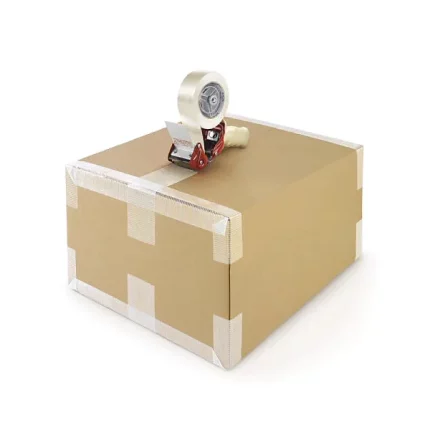 The H-tape method is the standard box sealing technique used in commercial despatch. It uses three strips to form an H shape across the seam. One strip runs along the full length of the centre seam. One strip folds down each end, covering 50 to 75mm onto both faces of the carton. The three strips together form the letter H when viewed from above.
Follow these four steps for a reliable application every time.
Press the top and bottom flaps flat so the seam closes cleanly along the centre. A gap in the seam, even a small one, concentrates stress on the tape rather than distributing it across the board. If the flaps don’t align flush, the carton is the wrong size for the contents.

Lay a single strip along the full length of the centre seam, extending 50mm onto the side walls at each end. Don’t stop the strip at the edge of the flap. That overhang bonds the strip to the side wall and prevents the tape peeling back from the seam end under load.
Apply one strip across each end of the box, running perpendicular to the centre strip. Each strip should cover the seam junction at the end flap. Extend 50 to 75mm onto both the top and bottom faces. Press firmly along the full length of each strip, including where it wraps the corner.
Run your palm or the base of a tape dispenser along each strip from end to end immediately after application. This presses the adhesive into the board surface and removes any air pockets. Cold adhesive or a dusty surface reduces initial tack, so this step matters more in unheated environments or on reused boxes.
For a guide to choosing the right specification for your box weight and transit conditions, read our tape buyer’s guide.
The H-tape method with three strips is the minimum for any carton going into commercial transit. The number of additional strips and the specification you’ll need depends on the load.
| Box weight | Strips required | Recommended specification |
| Up to 10kg | Three strips (H-tape) on top and bottom | Standard polypropylene, 48mm width |
| 10kg to 20kg | Three strips top and bottom plus one along each side seam | Standard polypropylene; consider a reinforced option for added coverage |
| 20kg to 30kg | H-tape plus reinforcement strips along all four edge seams | Heavy-duty polypropylene or reinforced kraft |
| Above 30kg | H-tape plus full edge reinforcement | Cross-woven filament from the industrial range |
Double-wall cartons hold heavier goods but the board itself contributes to seal strength. If the board is properly rated for the load, the tape seals the flaps rather than supporting the structure. Don’t over-tape a correctly specified double-wall box; do add extra strips if the board is single-wall and the load is above 15kg. For heavy-duty options, see the industrial tapes.
Most seal failures are caused by one of four errors.
Both matter in different ways. Correct sealing technique prevents the most common failures: seam-end peeling, corner lifting and mid-transit opening on under-taped boxes. The right tape specification prevents failures under load, at temperature extremes and on difficult surfaces.
If boxes are failing at the seam ends or lifting at the corners, the technique is the issue. If boxes are holding initially but failing under compression or in cold transit, the specification is likely wrong. A standard 48mm brown parcel tape with hot melt adhesive won’t hold reliably below 15°C, regardless of how well it’s applied.
For more information, read our complete guide to adhesive tapes.
The H-tape method with three strips is how to apply correctly for most commercial despatch. Apply with firm pressure on a clean surface above 15°C. Add strips for heavier boxes, switch to an acrylic adhesive for cold environments and upgrade to a heavy-duty specification for anything above 20kg.
The full packing tape range covers all the specifications referenced in this guide.
Apply the centre strip along the length of the seam, running parallel to the box’s longest dimension. This covers the greatest length of the join in a single strip. Applying the strip across the width achieves less coverage per strip and leaves more seam length unprotected.
Yes, but some inkjet-printed labels have a surface that reduces adhesion. If the tape won’t grip the label surface, apply tape around the label edges rather than over the face. Alternatively, use a packaging label with a laminate coating.
Yes. The base seam carries the full weight of the contents throughout transit and is under more sustained load than the top. Apply the same H-tape method to the base as to the top. Under-taping the base is the single most common cause of box base failure on heavier goods.
Standard hot melt reaches handling strength within a few minutes of application. You can stack immediately for most operations. For maximum bond strength on heavier goods, allow 20 to 30 minutes before applying significant compression loads. Acrylic adhesive builds full strength over 24 to 72 hours, though handling strength develops quickly.
A wider option creates a larger bonded area per strip, which improves seal integrity on larger cartons. The RAJAPACK range stocks 48mm and 75mm widths in standard polypropylene. But width doesn’t compensate for incorrect technique. A 75mm strip applied without pressure and without end strips will fail more readily than a 48mm strip applied correctly using the H-tape method.