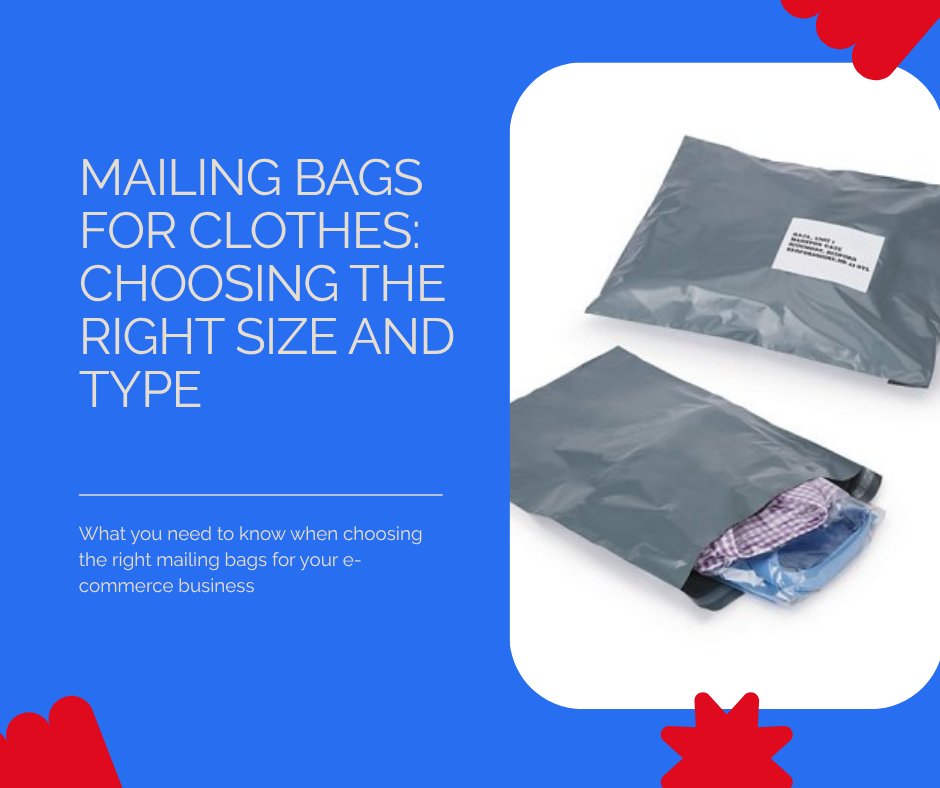
Mailing bags for clothes: choosing the right size and type
6
min read22 June 2026








For most clothing orders, a mailing bag is lighter, cheaper to post and quicker to pack than a box. The key is matching the bag size and material to what you’re sending.
This guide is for online clothing sellers choosing mailing bags for clothes for the first time, or switching supplier. It covers when to use a bag, how to pick the size, the main materials and whether mailing bags are recyclable.
In this article, we’ll cover:
Use a mailing bag for soft, non-fragile clothing, and a box for anything rigid, fragile or boxed. Mailing bags for clothes save weight and space, which keeps your postage and storage costs down.
A jumper, a dress or a pack of socks travels well in a bag because there’s nothing to crush. Keep a few postal boxes on hand for shoe orders in their own box, or for items with hard fastenings that could tear a bag.
For the full mailing bags vs boxes comparison, read our guide to what every online seller needs.
Mailing bag sizes are usually given as width by length, in millimetres or centimetres, before the lip and seal. Choose a bag that fits the folded garment with a little room, not one the item rattles around in.
A single folded t-shirt fits a small bag around 250 x 350 mm, while a dress or a chunky jumper needs a medium bag near 350 x 450 mm. For multiple items or a bulky coat, step up to a large bag around 450 x 550 mm or bigger.
A standard adult shoe box fits a large mailing bag around 425 x 600 mm, which leaves room to seal without straining the bag. If you often post trainers in their original box, keep one large size as your default for footwear.
The four common types are poly, paper, padded and compostable. Each suits a different product and price point, so most sellers keep one or two types rather than all four.
Pick the size that fits your most common order, then add one size up and one down. For clothing, water resistance matters, so poly or compostable bags protect against rain better than plain paper.
If your brand sits at the premium end, paper mailing bags for clothes give a cleaner unboxing and recycle with household paper. Match the bag to the product and the brand, and order a sample pack before you commit to bulk.
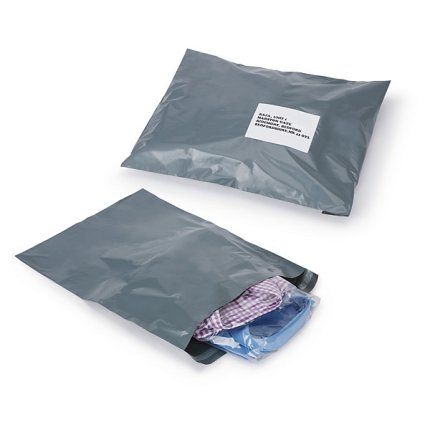
Fold the garment neatly, slide it in flat, then press out the air before sealing the self-adhesive strip. Flat, air-free parcels are less likely to snag in sorting machines.
For paper bags or high volumes, a bag heat sealer adds an extra level of protection, and you can add a thin layer of tissue around delicate fabrics so nothing rubs in transit.
It depends on the material. Most poly mailing bags are recyclable with carrier bags at larger supermarkets, paper bags go in household recycling, rather than go in the kerbside recycling. Compostable bags break down in the right conditions.
Paper mailing bags can usually be recycled at the kerbside as part of household paper recycling, provide they’re clean and don’t contain other materials, such as a bubblewrap lining.
Make sure to check with your local council to confirm what exactly can go in your kerbside recycling.
Our guide to recycling envelopes and mailing bags explains where each type goes. Adding a short recycling line on your packing note helps customers dispose of mailing bags for clothes correctly.
Not sure which size fits your bestsellers? Order a sample pack from the mailing bag range and test it against what you sell before buying in bulk.
Yes, standard poly bags handle most multi-item clothing orders, though a co-extruded or heavier-gauge bag is worth it for bulky coats or knitwear. For anything over about 2kg, check it still fits your postage band.
Poly bags can often be reused once if undamaged and the old label is covered, which cuts cost and waste. Paper bags usually tear on opening, so they’re better recycled than reused.
Most clothing mailing bags comfortably hold up to 2kg, which covers nearly all single-garment and small multi-item orders. Above that, a box gives better protection and a more reliable seal.
Plain items of clothing rarely do, but items with sequins, zips or delicate trims benefit from a layer of tissue, which doesn’t add any postage weight.
It varies by product, so always check the certification on the bag before advising customers. Many compostable mailing films are certified for industrial composting rather than a home compost bin.