Packaging for small business: what every online seller needs
9
min read17 June 2026








Whether you’re selling on Etsy, Shopify, eBay or Amazon, choosing the right packaging for your small business helps reduce postage costs, protect products during shipping and improve the customer experience. Getting packaging for a small business right comes down to four things:
Get those four things consistently correct and you’ll streamline your whole postage and packaging process and avoid paying more than you need to.
This guide is for anyone starting to sell online, whether you ship clothing, jewellery, soap, homeware or something else entirely. If it goes from your business to your customer via the postal system or a courier, you’ll find some invaluable information below. We’ll walk through what to buy first, how to protect orders in transit and how to brand your parcels without the need for a large budget.
In this article, we’ll cover:
Packaging is the first physical thing a customer touches when they receive your order, and it can influence whether it arrives intact. For a new seller, it influences both your damage rate and your chance of a repeat order.
Good packaging for an online business does two jobs at once. It protects the product as it makes its way through the post, and it carries your brand to the doorstep. A parcel that arrives crushed or torn costs you a refund and one that arrives neatly packed can lead to a positive review and a new loyal customer.
You don’t need a warehouse of materials to start. You need a small, repeatable set you can grab for every order, then a few extras for the items that need more care.
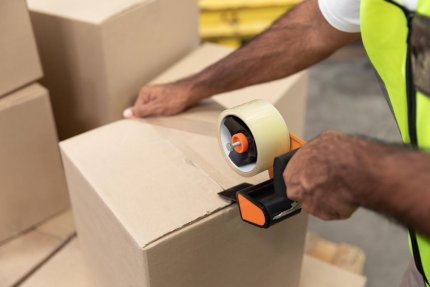
Most sellers can start with three things: two or three mailing bag sizes, two or three box sizes, and a strong packing tape. Add labels and a little void fill and you can ship almost anything you sell.
If you’re asking what packaging you need to start a business, here are the essentials:
Your product decides the mix. Clothing packaging for small businesses often start with a poly or paper mailing bag, while jewellery and soap usually need a small box with a little protection inside. The right packaging for small business orders is the kind you’ll reuse on every single despatch.
Use a mailing bag for soft, non-fragile items like clothing, and a box for anything rigid, fragile or heavy. Bags are lighter and cheaper to post, while boxes protect better and stack neatly.
A t-shirt, a scarf or a pair of socks travels fine in a bag. A mug, a candle or a boxed gift set needs the rigid walls of a box. When you’re unsure, choose the box, as a damaged order costs far more than a few extra pence of cardboard.
Protection means filling empty space so the product can’t move, then cushioning anything fragile. Void fill stops items shifting inside the box, and bubble wrap packaging absorbs the knocks a parcel takes on a van.
Wrap fragile items individually and keep them away from the box corners, which take the hardest hits. If you can shake a packed box and hear movement, add more fill before you seal it.
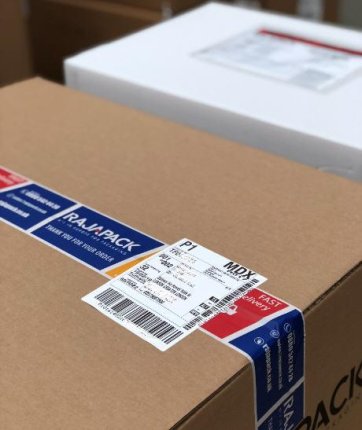 Seal boxes with the H-taping method, apply one clear address label on the largest flat face, and keep a return address on every parcel. A clean seal and a readable label are what keep your orders out of the lost-mail pile.
Run a strip of tape along the centre seam and across both end seams so the flaps form an H. For more information, read our guide on how to apply tape correctly. For addressing, our guide to labelling packages for shipping covers what goes where.
You don’t need custom boxes to brand a parcel. Branded tape, a printed sticker, a sheet of tissue and a short thank-you card do most of the work for very little.
Cute packaging ideas for small business don’t need a big spend: coloured tissue paper, a stamp and a sticker turn a plain box into something potentially worth sharing on social media. The most affordable packaging for small business branding is also the simplest, and it scales as you grow.
Practical swaps that work from your first order include paper tape, paper void fill, recycled boxes and recyclable or compostable mailing bags. None of them slows your packing down.
You’ll also need to know the rules. Extended Producer Responsibility (EPR) now affects many sellers, and our guide to EPR and what it means for you explains who pays and when. For the full set of swaps, see sustainable packaging for small business and how to recycle packaging materials.
Match the parcel to the product. An oversized box costs more in void fill and can push you into a higher Royal Mail price band, so a few millimetres really can matter.
Couriers often charge on volumetric (dimensional) weight, not just actual weight, so a big light box can cost as much as a small heavy one. Our guide to volumetric weight and reducing packaging costs shows how to work it out, and Royal Mail parcel sizes and prices explains the bands.
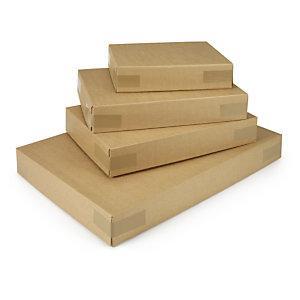
Good packaging for a small business comes down to a short, repeatable set of materials you trust. Add a sensible range of sizes so you’re never forcing a product into the wrong fit. Start small, ship a few orders, then adjust your sizes based on what you post.
Once your bestsellers settle, order those sizes in bulk and keep a couple of spares for odd items. That’s how a kitchen-table operation turns into a packing routine that runs in minutes.
Start with a small range of boxes, bags and tape, then add sizes as your orders grow. Browse the full range to see what fits your products and order before 5pm for next-day delivery on most lines.
Browse the e-commerce packaging range.
Aim to keep packaging under 5 to 10% of the order value, then refine it as you learn your damage rate. Buying a small range first, before committing to bulk, avoids overspending on sizes you won’t use.
Rarely, and it usually costs more in the long run through void fill and dimensional weight charges. Two or three sizes across bags and boxes covers most product ranges efficiently.
RAJAPACK sells packaging in smaller pack sizes as well as bulk, so you can test what works before scaling up.
No. A plain box with branded tape, a sticker and a thank-you card looks considered without the cost or minimum order of custom-printed boxes.
Fill all empty space so the product can’t move, cushion fragile items away from the box corners, and seal with the H-taping method. Choosing a box over a bag for anything rigid prevents most damage.
Right-size the parcel so you use the smallest box or bag that protects the item, which lowers both materials and postage. Reusing clean inbound packaging for outbound orders cuts costs further.