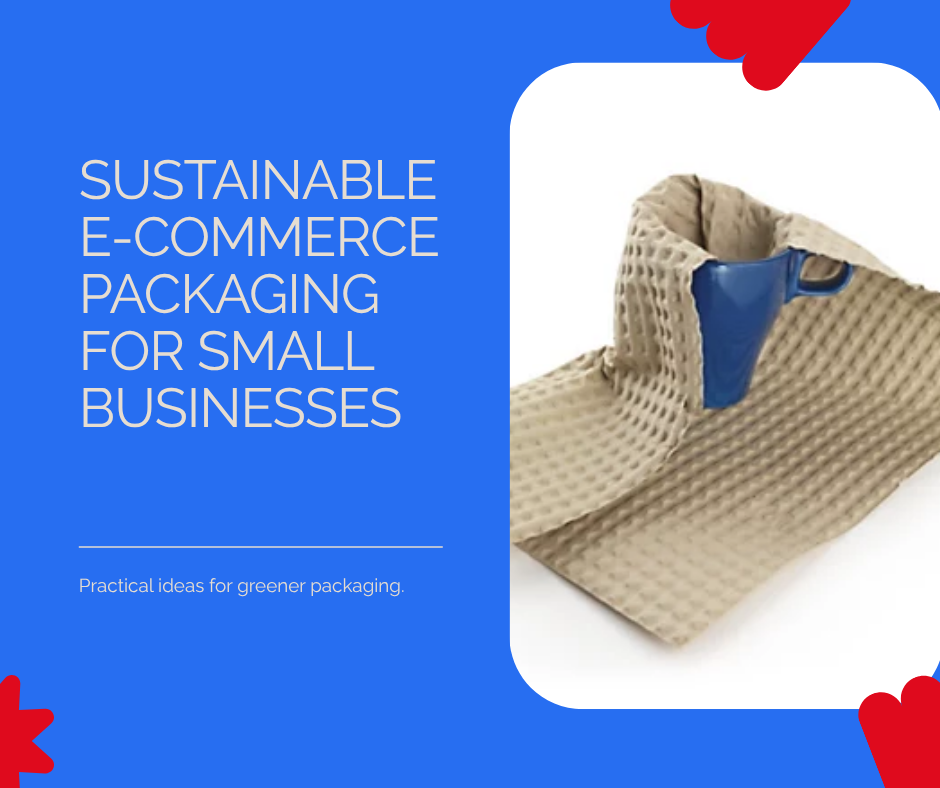
Sustainable e-commerce packaging for small business UK: practical ideas
4
min read29 June 2026








You can switch to sustainable e-commerce packaging (also known as eco-friendly packaging) for small businesses in the UK without slowing your packing down or losing protection. The simplest swaps are paper tape, paper void fill, recycled boxes and bags.
This guide is for UK sellers who want greener packing and need to know the rules. In this article, we’ll cover:
Eco-responsible packaging is material that’s recycled, recyclable or reusable, and sized so you use less of it. The greenest parcel is usually the smallest one that still protects the product.
No single material is perfect, so the aim is fewer materials, more recycled content and packaging your customer can dispose of easily. That’s the practical bar for eco-friendly packaging for small business UK sellers.

The quickest wins are paper tape instead of plastic, paper void fill, recycled-content boxes, and recyclable or recycled polythene mailers. These eco-friendly packaging ideas drop straight into an existing packing routine.
Reusing clean inbound packaging is the cheapest swap of all, and our guide on how to recycle packaging materials covers what goes where.
Plastic-free packaging means paper, card and plant-based materials in place of poly bags, plastic tape and bubble wrap. Paper mailing bags, cardboard boxes, paper void fill and gummed paper tape cover most orders.
Where you still use plastic, choosing recyclable film and telling customers how to dispose of it helps. Our guide that answers can you recycle plastic bags? explains the kerbside picture.
Start with swaps that cost little or nothing, like right-sizing and reusing inbound boxes, then add recycled materials as volume grows. Sustainable choices often cut cost too, because less material and smaller parcels mean lower postage.
You don’t have to switch everything at once. Moving one material at a time keeps eco-friendly packaging for small business affordable while you test what protects your products. For everything else a new seller needs, see our guide to packaging for small business.
Start with one or two swaps and test them against your products. Order recycled samples from the range and see how they perform before you change everything.
Some recycled materials cost a little more per unit, but right-sizing and reusing often cancel that out. Smaller, lighter parcels also lower your postage, which offsets the material cost.
Yes, for most orders. Recycled bubble wrap, paper void fill and double wall boxes protect as well as virgin plastic when sized correctly.
Recycled means the material is made from reprocessed content; recyclable means it can be reprocessed after use. The greenest packaging is often both.
It depends on your size and how much packaging you handle, under EPR and the Plastic Packaging Tax. Smaller businesses may have lighter reporting duties, so check the current thresholds before assuming you’re exempt.