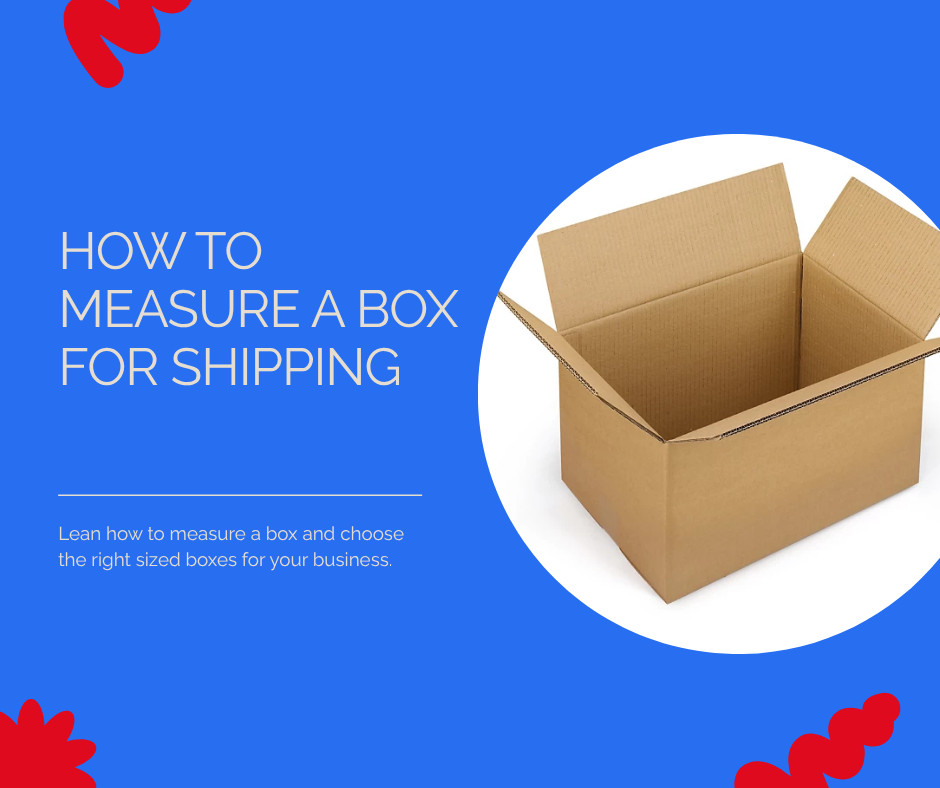
How to measure a box for shipping and choose the right size
5
min read15 July 2026








To measure a box for shipping, the quickest thing to do is take the length, width and depth of your product and add 1 to 2 cm on each side. Getting that fit right protects the goods and keeps postage low. But, there are also other ways to make sure you right-size your boxes.
This guide is for online sellers and warehouse teams choosing shipping boxes. Here, we’ll cover:
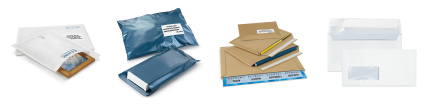
The three you’ll use most are postal boxes, mailer boxes and double-wall boxes. Postal and mailer boxes suit lighter goods, while double-wall boxes carry heavier or fragile items.
Cardboard is graded by how many layers of fluting it has. To understand the board itself, our guide to corrugated cardboard boxes explains the construction, and we even have a history piece on who invented the cardboard box.
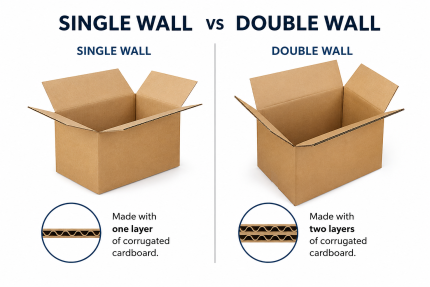
Single wall cardboard boxes have one layer of fluting and suit goods up to about 10kg. Double wall cardboard boxes add a second layer for heavier items, sharp edges or anything you’d stack on a pallet.
Most e-commerce ranges are covered by three or four box sizes, not one box per product. They run from a small postal box around 15 x 10 x 10 cm up to a large box near 60 x 40 x 40 cm.
As a rough starting set, these sizes work for most e-commerce ranges:
These are a guide, not a fixed catalogue. For the exact internal and external dimensions, check the cardboard box sizes on the standard boxes range before you order.
Measure internal dimensions in the order length, width then depth (height). Internal sizing is what your product has to fit; external sizing matters for storage and pallet planning.
Lay the product flat, measure its longest side for length, the shorter side for width, and its height for depth. Add 1 to 2 cm on each side so the item sits with a little room for protection.
Knowing how to measure a box for shipping is what stops you over-ordering size and paying for air. For the wider picture, see our guide to packaging for small business.
Choose the smallest box that holds the product with room for protection on all sides. Right-sizing your boxes cuts your void fill, lowers your damage rate and keeps parcels in a cheaper postage band.
Couriers often price on volumetric (dimensional) weight, so an oversized box can cost as much as a heavy one. Our guide to volumetric weight and packaging costs shows how to calculate it.
Use a box for anything rigid, fragile, heavy or boxed, and a mailing bag for soft, non-fragile items. Boxes protect better and stack neatly; bags are lighter and cheaper to post.
If you sell clothing alongside homeware, you’ll want both. Our guide to mailing bags for clothes covers the soft-goods side.
Most cardboard shipping boxes are widely recyclable at kerbside once flattened and free of heavy tape or labels. Clean inbound boxes can often be reused for outbound orders to cut cost and waste.
Our guide to how to dispose of used cardboard boxes covers what to do with damaged stock. Removing plastic tape before recycling keeps the cardboard clean for the mill.
Not sure which sizes fit your products? Order a mixed sample from the postal and cardboard box range and test the fit before committing to bulk.
A medium box around 30 x 22 x 15 cm handles the largest share of typical e-commerce orders, from books to bundled clothing. Most sellers pair it with one smaller and one larger size.
Match your product to the internal dimensions, since that’s the usable space inside the assembled box. External dimensions matter for storage and pallet planning, not product fit.
You can, but an oversized box often tips you into a higher postage band and costs more in void fill. A box just larger than the product is almost always the more affordable choice.
Choose double wall board for heavier items, fill empty space so the walls are supported, and seal with the H-taping method. Underfilled boxes collapse more often than overfilled ones.
Yes, standard cardboard shipping boxes are supplied flat and assemble by folding along the pre-scored lines. This keeps storage compact until you need them.