How to pack to fit Royal Mail’s size bands
8
min read06 July 2026








Your packaging decides which Royal Mail size band an order falls into, and that band is the biggest lever you have on postage. Pack to fit Royal Mail’s size bands and you keep more orders in the cheaper formats.
This guide is for online sellers who want to cut despatch costs without losing protection. It’s about packing choices, not the price table.
In this article, we’ll cover:
Royal Mail sorts post into four size bands: letter, large letter, small parcel and medium parcel. Your item sits in whichever band its largest dimension and its weight both still fit inside. Understanding which band your packed item falls into is the fastest way to find postage savings.
Royal Mail publishes the full definitions in its size and weight guide, and every figure below is taken from it.
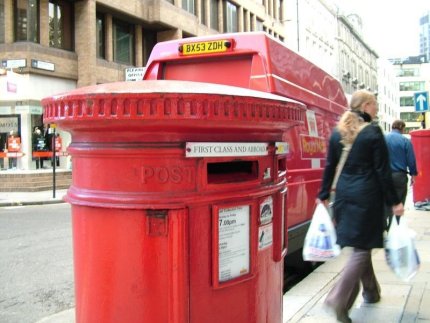
Each band sets a maximum size and a maximum weight, and your packed item has to fit inside both.
| Size band | Maximum size | Maximum weight | Typical items |
| Letter | 24 x 16.5 x 0.5 cm | 100 g | Cards, letters, postcards |
| Large letter | 35.3 x 25 x 2.5 cm | 750 g, or 1 kg on Tracked 24 and Tracked 48 | A4 documents, magazines, slim padded mailers |
| Small parcel | 45 x 35 x 16 cm | 2 kg | Shoes, handbags, board games |
| Medium parcel | 61 x 46 x 46 cm | 20 kg | Heavier or bulkier orders |
| Parcelforce | 1.5 m long, 3 m length and girth combined | 30 kg | Anything above medium parcel |
A standard letter is up to 24 x 16.5 x 0.5 cm and 100 g and has to flex.
A large letter measures up to 35.3 x 25 x 2.5 cm. The weight limit depends on the service: 750 g on 1st Class, 2nd Class and Signed For, but 1 kg on Tracked 24 and Tracked 48. That covers most A4 documents, slim paperbacks and thin padded mailing bags, so long as they stay under 2.5 cm thick.
The large letter band is the one sellers miss most, because a few millimetres of thickness tips it into a parcel.
A small parcel goes up to 45 x 35 x 16 cm, with a 2 kg weight limit. A medium parcel goes up to 61 x 46 x 46 cm and 20 kg. That is where Royal Mail’s own bands stop.
Anything over 20 kg, or larger than 61 x 46 x 46 cm, moves to Parcelforce Worldwide. Parcelforce takes items up to 30 kg, with a maximum length of 1.5 m and 3 m for length and girth combined.
Cylindrical items are measured differently again, because the diameter counts as well as the length. If you post posters or drawings, check the packed tube against the band limits first, then size your postal tubes to the format you want to hit.
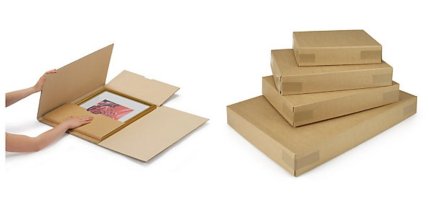
Your packaging, not just your product, sets the band, because Royal Mail measures the packed item.
The step from large letter to small parcel is the biggest single price jump, so it pays to keep eligible items flat and under 2.5 cm. Choosing between postal boxes and flat polythene mailing bags can help you stay in the cheaper band.
A thin padded mailer can post as a large letter if the packed item stays within 35.3 x 25 x 2.5 cm and under the weight limit for your service. Once it’s thicker than 2.5 cm, it becomes a small parcel. That’s why right-sizing your packaging directly affects the price you pay.
A single thin garment in a flat mailer can qualify as a large letter if it stays under 2.5 cm thick and within the weight limit. Bulkier or multiple items will usually price as a small parcel.
How thick can a large letter be for Royal Mail? The hard limit is 2.5 cm, measured on the packed item, including the mailer itself. Even a mailer that adds 3 mm to a borderline product can push you into small parcel pricing. Slim padded envelopes sit closer to that limit than most sellers expect.
A slim product in a thick box most likely crossed into the next band, often on thickness rather than weight.
Small parcel dimensions run up to 45 x 35 x 16 cm with a 2 kg limit. Medium parcel extends that to 61 x 46 x 46 cm and 20 kg. If your product fits the small parcel band on size but sits close to the 2 kg limit, look at weight rather than dimensions. Switching to lighter void fill, or moving to single wall boxes, can cut weight without cutting protection.
Royal Mail changed its prices on 7 April 2026. What the band jump costs you depends heavily on the service you ship with.
| Service | Large letter | Small parcel | Cost of crossing the band |
| 2nd Class | £1.55 | £3.95 | £2.40 |
| 1st Class | £3.20 | £5.15 | £1.95 |
| Tracked 48 | £2.85 | £3.65 | 80p |
| Tracked 24 | £3.80 | £4.65 | 85p |
Those are online prices for items inside each band’s weight limit. On 2nd Class, crossing from large letter to small parcel adds £2.40 and more than doubles your postage. On Tracked 48 the same step costs 80p.
So the band matters most if you ship 2nd Class. If you ship tracked, the penalty is smaller and the large letter allowance runs to 1 kg rather than 750 g. Buying through Click and Drop is cheaper than paying at a Post Office counter on most services.
Rates change, so verify the figure that applies to you on the Royal Mail prices page before you set your despatch charges.
Keep eligible items flat and under the large-letter limits, and right-size everything else so it doesn’t creep up a band. Small packing changes add up fast across hundreds of orders.
Packing to fit Royal Mail’s size bands lets you design despatch around the cheaper formats. For the wider picture, see our guide to packaging for small business and how to measure a box for shipping.
Royal Mail’s retail bands price on the size band and the actual weight of the packed item. Couriers and some business account services use volumetric (dimensional) weight instead. Volumetric weight charges you for the space a parcel takes, so a big light box can cost more than its weight suggests.
The fix is the same either way: use the smallest packaging that still protects the product. Keep eligible items flat and under the large-letter limits, and right-size everything else so it doesn’t creep up a band.
Small packing changes add up fast across hundreds of orders. Packing to fit Royal Mail’s size bands lets you design despatch around the cheaper formats.
Sizing your packaging to Royal Mail’s size bands is the easiest way to save on postage. Browse the full range of mailing bags and match your packaging to the band you want to hit.
A thin padded mailer can post as a large letter if the packed item stays within 35.3 x 25 x 2.5 cm and 750 g. Once it’s thicker than 2.5 cm, it becomes a small parcel.
Royal Mail measures the packed item, including the box or bag, not the product alone. That’s why right-sizing your packaging directly affects the price you pay.
A single thin garment in a flat mailer can qualify as a large letter if it stays under 2.5 cm thick and 750 g. Bulkier or multiple items will usually price as a small parcel.
It most likely crossed into the next band, often on thickness rather than weight. Measuring the packed item against the large-letter limits before posting avoids the surprise.
Royal Mail usually updates prices once a year, typically in April, with occasional other adjustments. Always check the Royal Mail website for the live rate rather than relying on a printed table.