Silica gel sizing: how to work out how much desiccant your shipment needs
7
min read30 April 2026








A practical guide for B2B packing teams. Covers the variables that matter, the rule of thumb most operations use, and when to step up from silica gel sachets to calcium chloride container desiccants.
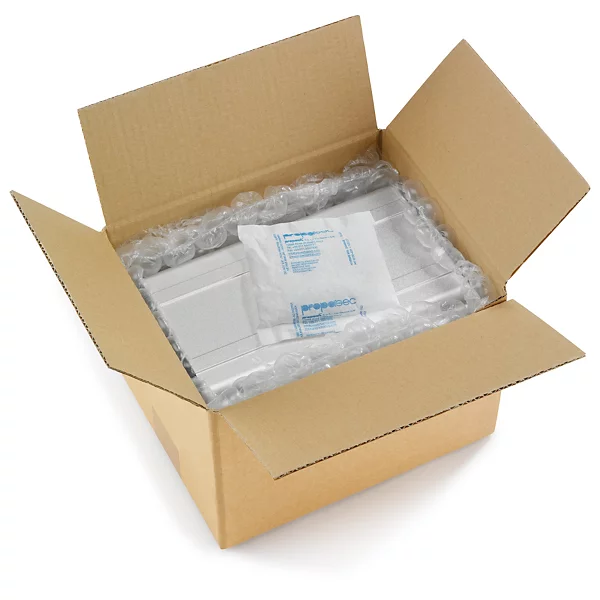
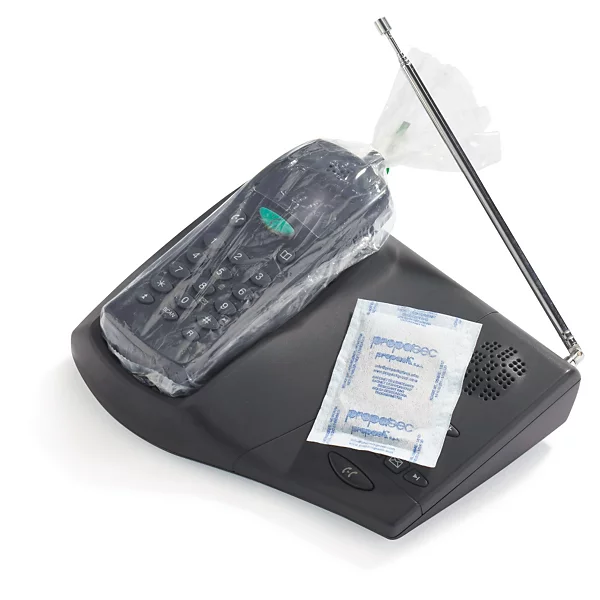
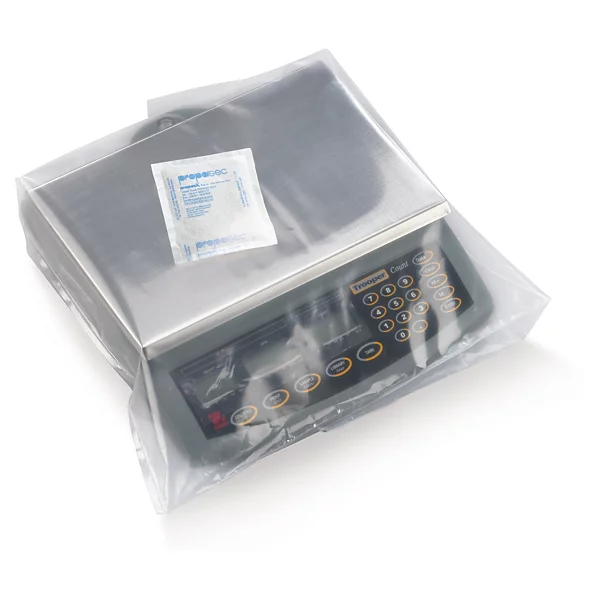
Most failed desiccant jobs aren’t caused by bad silica gel. They’re caused by a packing line dropping a small sachet into a carton that needed several times the dose, or buying premium product when standard would have done the same job at a fraction of the cost. Sizing is where silica gel either works invisibly or fails visibly, and it’s where most UK packing operations are still working off rough guidance rather than the actual moisture profile of the goods being shipped.
This piece covers the two variables that actually decide pack size, the rule of thumb that most B2B packing operations work to, and the three failure cases we see most often.
Two things determine how much silica gel a shipment needs. Get either wrong and the sachet either fails to control humidity or becomes expensive overkill.
Air volume. The amount of air sealed inside the package or container. A silica gel sachet absorbs a fixed proportion of its own weight in moisture (around 22-24% for standard silica gel), so dose has to be matched to the volume of humid air the sachet is fighting against. More air means more dose required.
Packaging permeability. A heat-sealed barrier foil pouch retains the dry environment created by silica gel for far longer than a standard cardboard carton, which leaks moisture in and out continuously through the corrugation, glue lines, and seams. The same dose of silica gel will protect a barrier-bagged product for considerably longer than it will protect a plain carton, which is why exporters of moisture-sensitive goods nearly always pair silica gel with a sealed inner liner.
The working rule used across most B2B packing operations is 5 grams of silica gel per cubic foot of sealed air space. That figure assumes a properly sealed barrier bag or laminated foil pouch and short-to-medium transit at typical UK ambient humidity.
For unsealed packaging like a standard single-wall or double-wall cardboard carton, dose at the higher end of the range. The carton itself does not retain a dry environment, so the silica gel is fighting a continuous influx of fresh humid air rather than a fixed, sealed volume.
The rule of thumb is a starting point, not a specification. For high-value goods, regulated industries (electronics, pharmaceutical packaging, archive storage), or longer transit windows, the right dose is calculated against the specific moisture profile of the product, the packaging stack, and the expected transit conditions. For applications where guesswork is not acceptable, your account manager or packaging specialist can model the dose against the shipment profile.
Underdosing standard cartons. The most common mistake. A small sachet thrown into an unsealed box will saturate quickly and offer no further protection. The packing line ticks the “moisture protection” box, the customer receives mouldy contents months later. Dose for air volume and permeability, not for whichever sachet size happens to be in stock on the line.
Self-indicating beads with no inspection routine. Self-indicating silica gel only earns its premium price if someone actually checks the colour. If the desiccant is going into a sealed shipment that the buyer will not open before use, standard silica gel does the job for less.
Reusing damp gel without proper drying. Reactivation only works if the sachets have been kept reasonably dry between uses. Silica gel that has sat at high humidity in a damp warehouse for weeks will not regenerate cleanly even after oven drying. Reuse is genuinely cost-effective for closed-loop in-house packing, but it is rarely worth the operational overhead for shipped product.
Silica gel sachets up to around 100g are the right answer for individual cartons and short-to-medium transit. Past that, the operational economics flip. For palletised loads and 20ft or 40ft shipping containers, calcium chloride desiccants absorb around 250% of their own weight (compared to 22-24% for silica gel) and are designed to handle the much higher moisture loads generated by long sea freight transit and temperature differences between origin and destination.
Most exporters use both. A hanging container desiccant such as AbsorGel® Max handles the bulk humidity load inside the container, with silica gel sachets inside individual cartons catching residual moisture closest to the goods.
Silica and calcium chloride are the defaults across most B2B packing lines, but neither passes the buyer review when the brief is plastic-free or FSC-certified. Micro-Pak Dri Clay® is the eco-responsible alternative most often spec’d in: bentonite clay in a biodegradable FSC-certified Kraft paper sachet rather than silica gel beads in plastic film. The manufacturer reports it absorbs up to 40% of its weight in moisture, compared to 22-24% for silica gel.
Sizing logic is different. The 5g per cubic foot rule of thumb does not carry across. Dri Clay® is dosed by the manufacturer’s volumetric guidance: a 2g sachet for up to 2 litres of sealed air, scaling to a 33g sachet for up to 60 litres. For mixed packing lines, it is usually worth keeping silica gel as the standard line and Dri Clay® as the eco SKU rather than swapping wholesale.
Honest framing: if your requirements do not not actually require plastic-free or FSC, silica does the same job for less.
Silica gel can be reactivated by oven drying. The basic principle is to drive off the absorbed moisture under heat and return the beads to working capacity. It is cost-effective for warehouse and packing-line use where sachets are kept dry between cycles, less so for shipped product where one-shot sachets are operationally simpler. For application-specific reactivation guidance, contact your packaging specialist.
Most B2B packing teams buy silica gel in three modes: small-volume sachets in standard pack sizes for individual product packing, larger packs for warehouses running multiple lines, and contract supply for high-throughput operations. RAJAPACK stocks silica gel and desiccant sachets in every standard size your packing line is likely to need, with next-day UK delivery on stocked lines and bulk pricing for B2B accounts.
If you are sizing for a specific application and want a sanity check before placing a contract order, your account manager can model the dose against your shipment profile.