Packing efficiency at peak: where the seconds hide in despatch
7
min read14 September 2026








At peak, you rarely lose time in one big place. You lose it a few seconds at a time, on every single parcel, until those seconds add up to lost hours across a shift.
Packing efficiency is the lever most operations underuse going into peak, because the fixes are inexpensive relative to the extra throughput they deliver. This guide is for despatch and warehouse managers who need to get more parcels out of the same pack line without dropping standards.
In this article, we’ll cover:
The time cost of packing lives in movement and hesitation, not in the packing itself. Every reach for a box, every hunt for tape and every second spent building void fill by hand repeats on every order.
Map your order packing process as a sequence: pick the products, choose the right box or mailer, assemble and tape it, add cushioning or void fill, seal, then label. Then watch where a packer leaves the spot or waits for something. That’s where the warehouse packing process leaks time, and it’s almost always fixable with layout and the right consumables.
Four changes deliver most of the gain: an organised bench, boxes that erect in one action, one-strip tape and on-demand void fill. None of them is complicated, and they compound.
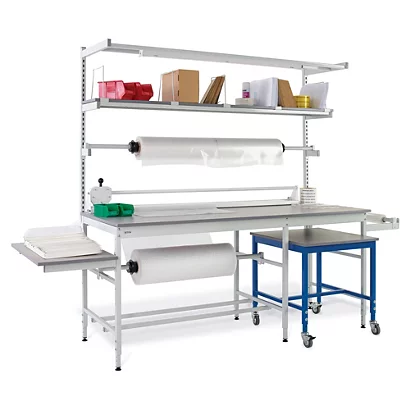
A packer should be able to pick, fold, fill, weigh, label and seal without leaving the spot. Well-designed packing benches put the worktop, consumables and dispensers within arm’s reach, so movement between parcels drops to almost nothing.
Set the worktop at roughly elbow height for standing work, keep the most-used consumables closest and clear everything else off the surface. Layout is free, and it’s often the single biggest gain in packing efficiency in the warehouse.
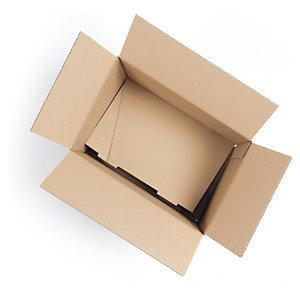
Flat-pack boxes that need taping along the base cost time and tape on every parcel. crash-lock boxes lock their base with a single press of both sides, so only the top needs sealing.
The base is reinforced with double-thickness board, and the boxes ship flat, so they store until you need them. At peak volume, skipping the base-taping step saves time on every parcel. A crash-lock base folds in about two seconds, against roughly ten to assemble and tape a standard box, and it uses less tape.
Multiple passes of plastic tape slow sealing and waste material. A single strip of gummed paper tape, applied from an automatic tape dispenser, bonds to the box in one action and seals the carton in one pass. It also controls exactly how much tape each parcel uses, so tape cost stays predictable.
The dispenser measures and wets each strip to length, so packers don’t cut, stretch or re-tape. If you’re staying with plastic tape, a well-set-up tape dispenser still beats hand-tearing on both speed and waste.
Building void fill or protective cushioning by hand, or fetching pre-made cushioning, adds movement to every order. A paper void fill machine produces void fill at the bench, at the moment it’s needed, in the amount each parcel needs. Paper protection and cushioning are available on demand in the same way, not just loose void fill.
A few seconds saved per parcel looks trivial until you multiply it by peak volume. Shave time off thousands of parcels a day and you free up real packer hours, which is capacity you’d otherwise have to hire or lose.
That maths matters more as the National Living Wage rises, because every packer hour is more expensive than it used to be. Faster packing isn’t only about getting orders out. It’s about getting more from the hours you’re already paying for.
To size the prize, our packaging cost calculator turns the seconds saved per parcel into a figure across your own peak volume.
On-demand void fill is worth a closer look for both speed and material saving, so it’s worth reading our guide to on-demand void fill and protection before peak. And because packers stand all shift, a comfortable bench setup protects the pace, which is where anti-fatigue mats and good layout work together.
Packing efficiency isn’t one upgrade. It’s the sum of a stocked bench, one-action boxes, one-strip tape and void fill made where it’s used, all arranged so the packer barely moves.
Fix the layout first, because it’s free, then add the consumables and equipment that remove the repeated steps. Do that before as soon as possible and the same team ships noticeably more through peak season.
Build your packing station with RAJAPACK. From the bench to the tape, we’ll help you set up a line that holds its pace through peak. Shop packing benches.
Remove repeated steps and movement from each parcel. An organised bench, one-action boxes, one-strip tape and bench-side void fill let the same team pack more orders in the same hours.
Movement and decisions. Deciding which box to use, reaching for tape or building void fill by hand repeats on every order, so those small delays cause the biggest cumulative loss at peak.
Yes, at volume. They lock their base with a single press instead of needing tape, removing one step from every parcel, which adds up quickly across a busy peak shift.
A great deal, and it’s free to fix. Setting the worktop at elbow height and keeping the most-used consumables closest cuts the movement that slows every parcel.
Multiplied by thousands of parcels a day, seconds become hours of freed packer time. That recovered capacity is the difference between coping with a surge and falling behind on despatch. Or increasing the team to cope with the additional demand
No, when the speed comes from layout and equipment rather than rushing. Removing wasted movement lets packers work faster while still giving each parcel the right box and protection.