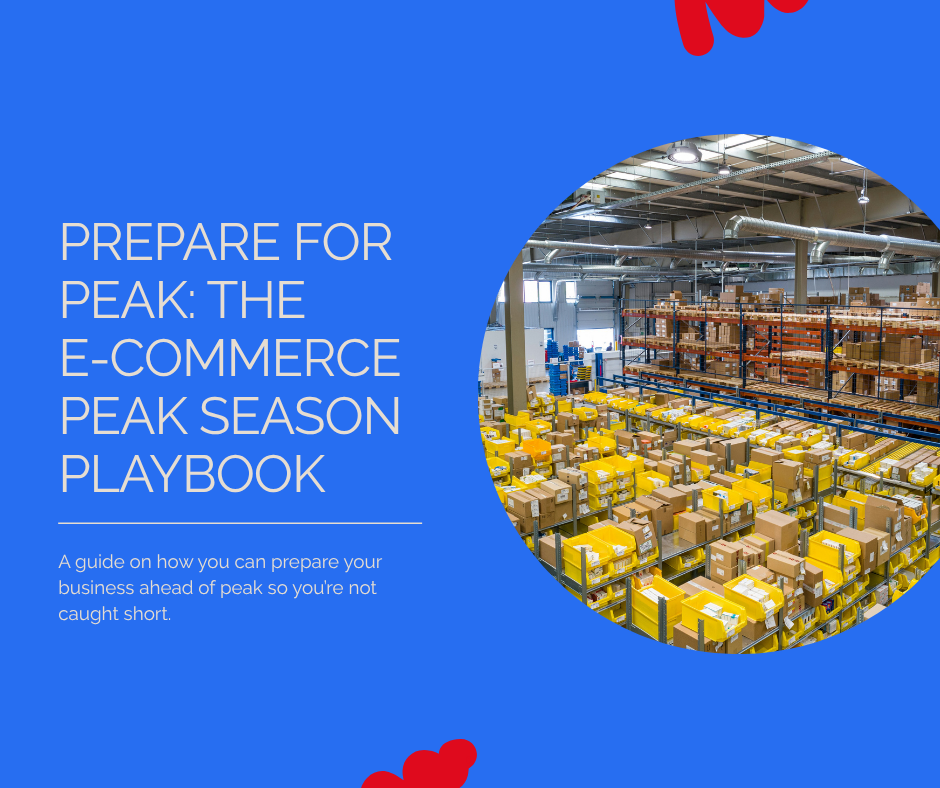
Prepare for peak: the e-commerce peak season playbook
7
min read06 August 2026








Peak season is a capacity test for your whole operation, and the pack bench is where you feel it first.
The businesses that thrive through e-commerce peak season are the ones that built capacity months earlier, staying ahead of the curve rather than waiting to order more stock in October. This playbook is for the operations, despatch and e-commerce managers who own fulfilment through the busiest weeks of the year.
In this article, we’ll cover:
Peak is the trading period when order volumes rise sharply above your normal baseline, usually from late October through to the January returns wave. For most UK sellers, e-commerce peak season runs across Black Friday, Cyber Monday, the last Christmas despatch dates and the returns that follow.
Retail peak season and the online equivalent do overlap, but they’re not identical. A high-street retailer feels footfall on the day, while an online operation feels it in the warehouse. For every e-commerce business, any extra order becomes a parcel that must be picked, packed, protected and despatched on time.
That’s why peak season packaging demand climbs at the same time as order volume. If you sell online, the peak trading period is measured in parcels out the door, not just sales on the dashboard.

More orders are good news, and your operation can be set up to meet them. What matters is whether your capacity can flex to match the demand. Demand is the thing you can’t fully control, while capacity is the thing you can.
Black Friday e-commerce volumes rise well above a normal trading day, and they arrive faster than most teams can pack. The constraint is rarely stock on the shelf. It’s benches, packer hours, box stock and courier collection slots, all fixed weeks in advance.
Frame peak this way and the job gets clearer. You’re not trying to predict demand to the unit. You’re making sure the operation can absorb a surge while holding your despatch cut-offs and keeping every parcel intact, so you meet or exceed what customers expect.
A peak-ready operation works backwards from the January returns wave to the summer, in three phases: plan, build capacity, then run and protect. The earlier phases matter most, because packaging stock and equipment both have lead times.
Start with the numbers you already own. Pull last year’s volumes, stockouts and delays, then set a capacity buffer on top.
This is where you make the pack line faster and free up floor space before volumes climb. Work through packing efficiency to find the seconds hiding in your despatch line, and warehouse space optimisation to stop storing air and start storing sellable stock.
Through live peak, the priorities shift to protecting the parcel and the people. Read reduce damage in transit on why an under-protected or oversized parcel costs far more than the box it saved.

Peak pressure shows up in five predictable places: the pack line, storage space, damage and returns, the team and planning itself. Each one has a fix you can put in before November, and each links to a detailed guide.
Small per-parcel savings scale hard across peak volume. A few seconds and a few pence saved on each order adds up quickly when you’re shipping thousands a day.
Thorough preparation will reap rewards in the peak season Pick the phase that matches the calendar: if it’s still summer, start with planning and packaging reservation. If autumn is here, move straight to building pack-line speed and freeing up space.
Whatever stage you’re at, the fastest way to a peak-ready plan is to talk it through with someone who has seen a lot of them.
Get peak-ready with RAJAPACK. Order next-day packaging stock now, and book a packaging expert to pressure-test your plan before the volumes land. Talk to a packaging expert.
For most UK online sellers, peak runs from October, when Black Friday demand builds, through to the January when returns are highest. The busiest despatch days cluster around Black Friday weekend and the final Christmas posting dates.
Yes. Black Friday and Cyber Monday often produce the single highest despatch volumes of the year. They set the pace for the weeks that follow.
Begin planning in August to September. Packaging stock and pack-line equipment both have lead times, so the useful preparation happens before volumes climb, not during them.
Because the bottleneck is usually capacity, not stock. Benches, packer hours and courier slots are fixed, so a surge of orders backs up at the pack line even when the products are on the shelf.
Yes. Peak season packaging demand rises across the whole market at once, and lead times stretch with it. If you’re expecting an uplift, talk it through with your packaging supplier early so they can plan supply around your volumes. We continue to offer next-day delivery through peak, and sharing your forecast is what secures your stock when market lead times are much longer.