Tamper-evident sealing: what it is and when your business needs it
8
min read02 June 2026








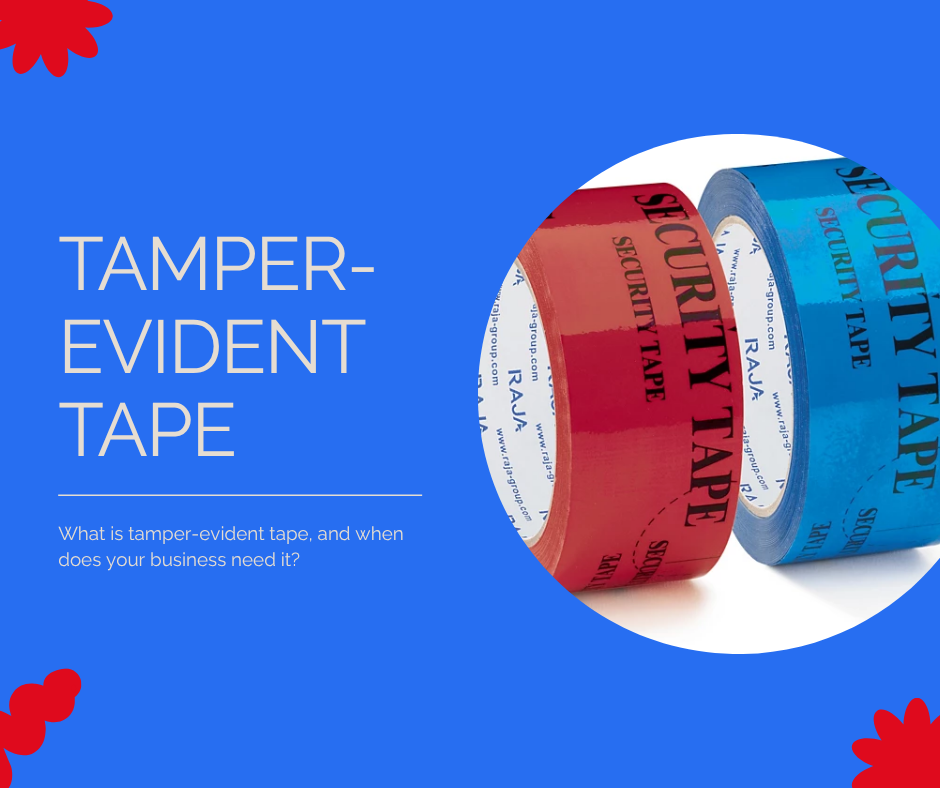
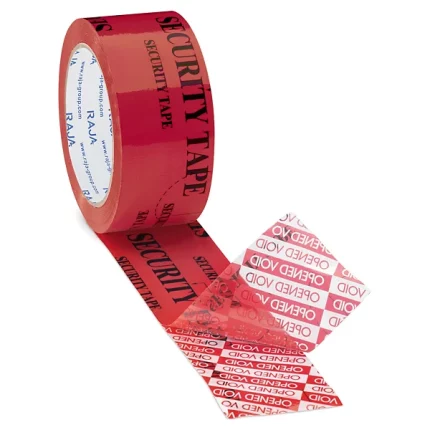
Tamper-evident tape sealing shows visible evidence of interference when removed or disturbed. The most common format is void tape, which leaves a ‘VOID’ message printed on both the tape and the sealed surface when peeled back. That message can’t be reversed or concealed by reapplication, which makes it an effective deterrent.
Not every despatch operation needs it. But for pharmaceuticals, electronics, subscription boxes and any product where proof of an intact seal matters commercially or legally, it’s an important addition to the packaging spec. This guide covers how it works and how to decide whether your operation needs it.
In this article, we’ll cover:
Tamper-evident sealing refers to any adhesive option that permanently records evidence of interference when removed from a sealed surface. The seal cannot be broken and restored without leaving a visible mark. This makes it physically impossible to open and reseal a package without detection.
Standard polypropylene leaves no evidence of removal. A careful cut with a blade, a fresh strip applied over the original and the interference is undetectable. Tamper-evident options eliminate that vulnerability entirely.
Void tape uses a specialised adhesive construction with a split release layer. When applied to a surface, the adhesive bonds to the surface below. The layer between the adhesive and the tape backing is engineered to separate cleanly when pulled.
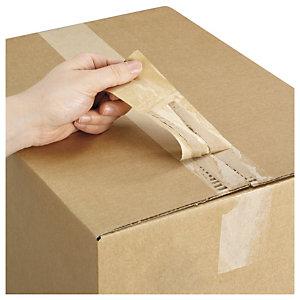
If the tape is removed, part of the adhesive layer stays on the surface and part stays on the backing. Both parts carry a pre-printed ‘VOID’ message embedded in the adhesive layer. The message is invisible until the tape is lifted, at which point it becomes permanently visible on the box surface and on the underside of the removed tape.
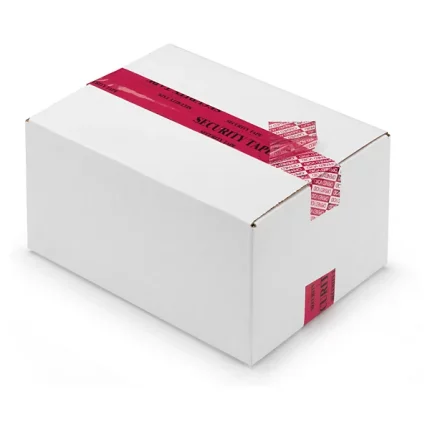 This is what distinguishes the void format from standard sealing: the record of interference is built into the adhesive layer itself. The box shows evidence of opening regardless of how the tape is repositioned. That permanent, non-reversible record is what makes the format effective as a deterrent and as a chain-of-custody evidence tool.
The RAJA Polyester Tamper Evident Security Tape is a 25-micron polyester construction with an acrylic adhesive, available in 50mm width on 50m rolls. The polyester backing carries the VOID message reliably and the acrylic adhesive bonds across a wider temperature range than rubber-based alternatives.
Tamper-evident sealing is used wherever proof of seal integrity has commercial, legal or regulatory value. The most common sectors and applications are below.
Drug supply chain regulations in the UK and EU require evidence of package integrity through distribution. Tamper-evident seals are standard on prescription dispensing, controlled drug packaging and medical device distribution. The visible evidence of interference also supports recall and returns management, where traceability of the sealed state matters.
Returned electronics are a high-fraud category. An undamaged seal on a returned unit is evidence that the product hasn’t been opened, which affects refund eligibility and restocking decisions. The void format on electronics returns is standard practice for any operation processing significant return volumes.
For subscription services and premium e-commerce brands, tamper-evident sealing signals to the customer that their order hasn’t been handled or sampled in transit. It also protects against courier handling disputes: if a package arrives opened and the void seal is broken, it’s clear the opening happened after despatch.
Customs authorities in many markets require evidence of package integrity for cleared consignments transiting bonded warehouses. Security sealing in international freight contexts is often specified as part of customs-compliant packaging requirements. It provides a physical audit trail alongside documentation.
There’s a meaningful difference between operations where tamper-evident sealing is a regulatory requirement and those where it’s a commercial decision.
Regulatory requirement applies in pharmaceutical distribution under UK Falsified Medicines Directive rules. It also applies in food safety contexts where tamper evidence forms part of the hygiene control plan, and in freight classifications requiring package integrity documentation.
Commercial requirement applies where your customer base expects it, where your return and fraud rates justify the investment or where your brand positioning requires it. A void seal on a premium subscription box costs very little per unit and removes a significant customer service vulnerability.
If neither applies to your business, then standard sealing is more than adequate. The decision is straightforward: does an undetected breach of your packaging cause a financial, legal or reputational problem? If yes, tamper-evident is probably needed. If no, the additional cost isn’t justified.
The RAJAPACK warning printed range covers several formats with different tamper-evident or warning functions. The table below summarises them alongside standard sealing for context.
| Format | How it shows tamper | Best for |
| Void polyester | Split adhesive transfers ‘VOID’ message to surface and tape | High-value goods, electronics returns, regulated supply chains |
| Pre-printed warning vinyl | Pre-printed warning message visible from despatch onward | Visible deterrent and handling guidance during transit |
| FRAGILE polypropylene | Pre-printed FRAGILE warning; standard sealing function | Fragile goods despatch with visible handling instruction |
| FRAGILE paper | Pre-printed FRAGILE warning on a recyclable backing | Fragile goods with kerbside-recyclable requirements |
| FRAGILE gummed paper | Tears cardboard surface on removal AND pre-printed warning | Maximum tamper-evidence with sustainability profile |
| Gummed paper | Tears cardboard surface on removal | Kerbside-recyclable requirements |
| Quality Control printed vinyl | Pre-printed audit-trail message | Quality control and process verification |
| Standard polypropylene | No tamper evidence – can be removed and reapplied | General despatch where seal integrity isn’t a specific concern |
If your products are high value, returns-heavy or subject to regulatory seal requirements, the void format is the standard specification. The unit cost premium over standard sealing is small relative to the fraud, dispute or compliance risk it removes.
For standard ambient despatch with no specific integrity requirements, standard sealing from the polypropylene range is adequate. The upgrade to tamper-evident is only worth making when there’s a clear, specific consequence of an undetected seal breach.
Read more about every type of tape in our complete guide to adhesive tapes.
No. The void mechanism is triggered by any attempt to peel the tape, regardless of speed or angle. The only way to open a void-sealed package without triggering the message is to cut through the tape itself rather than peel it. Cutting destroys the tape rather than revealing the void message, but the physical cut is equally visible.
It works reliably on standard corrugated board, most coated cartons and smooth cardboard. It may not transfer cleanly on low-energy plastic surfaces, heavily laminated cartons or surfaces with release coatings. Always test on your specific packaging before ordering in volume.
Yes, typically by a factor of two to four times the cost per roll of equivalent standard polypropylene. For most applications the cost per sealed box is still under a few pence per unit. Whether that premium is justified depends on the fraud, dispute or compliance risk of an undetected breach.
Water-activated paper is tamper-evident through a different mechanism: its starch-based adhesive bonds into the cardboard fibres and tears the board surface on removal. Void tape uses a split adhesive layer that transfers a ‘VOID’ message to the surface. Water-activated paper is recyclable with the cardboard box and provides a stronger structural seal. The void format is faster to apply and uses a polyester rather than paper backing.