









How to choose the right protective solution
During transport or storage, your products may be exposed to multiple risks, including shocks, vibrations, compression, scratches, and humidity. To prevent damage, each item requires a protection solution tailored to its fragility, size, and volume.
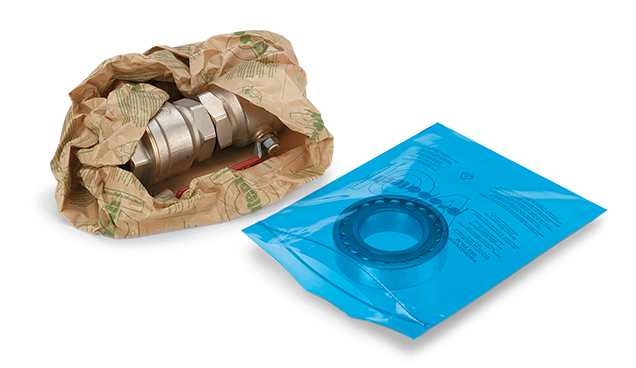
- Protective wrapping directly envelops the product to shield it from scratches, friction, and minor handling variations.
- Void fill, stabilises items within the package, fills empty spaces, and absorbs shocks and vibration.
When used together, protective wrapping and void fill ensure optimal
product protection and significantly reduce the risk of breakages, returns,
and avoidable logistics costs.
With RAJAPACK, you have access to a
comprehensive range of high-performance, versatile protective solutions
designed to suit every product type and every shipping requirement.

What factors should I consider when choosing protective packaging for my products?
Before choosing protective packaging, you should consider your product’s fragility, weight, size, packaging type, transport conditions, and any presentation requirements.
|
|
Type of products |
Recommended protective products |
|
Fragility of the product |
Fragile items: (glass, ceramics, cosmetics, electronics, items with sharp edges) |
Bubble wrap, foam wrap, foam corners and profiles, bubble bags |
|
Non-fragile items (toys, sturdy items) |
Wrapping paper, packing peanuts, air cushions |
|
|
Weight and dimensions |
Heavy or bulky goods |
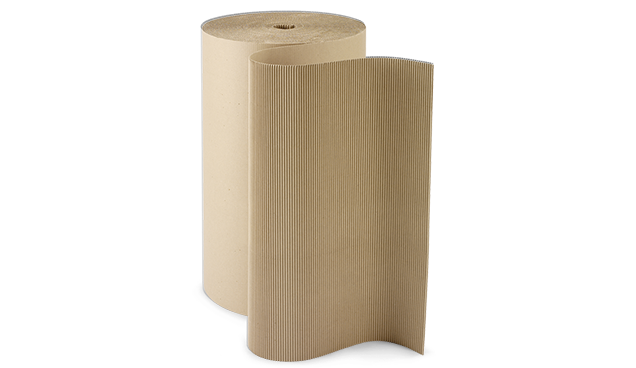
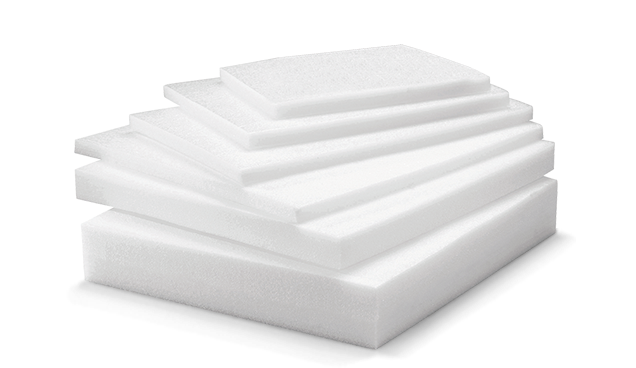
Cardboard sheets, foam sheets, cardboard corner protectors, cardboard blocks |
|
Lightweight or small products |
Bubble wrap, air cushions, packing peanuts, tissue paper |
|
|
Type of box/parcel |
Large parcels with lots of empty space |
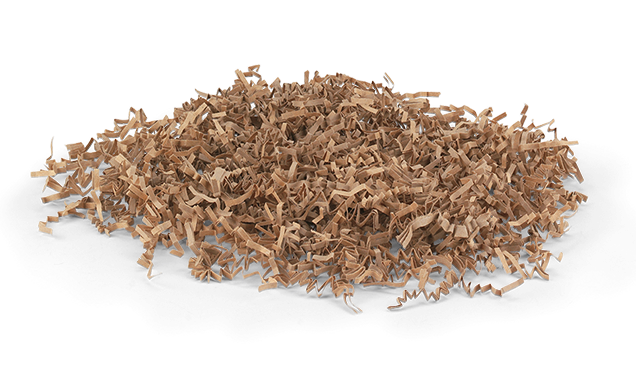
Crumpled paper, air cushions, packing peanuts |
|
Small parcels or specific formats (tubes, bottles) |
Bubble bags, sleeves or wraps |
|
|
Stacked items |
Divider sheets (cardboard, foam) |
|
|
Transport conditions |
Long distance |
Bubble wrap, packing peanuts, paper void fill |
|
Rough handling |
Foam and cardboard edge protectors, dividers |
|
|
Humidity, temperature variations, long-term storage |
Sheets, bubble wrap, desiccant packets |
|
|
Presentation requirements |
High-end products (gifts, cosmetics, textiles, decoration) |
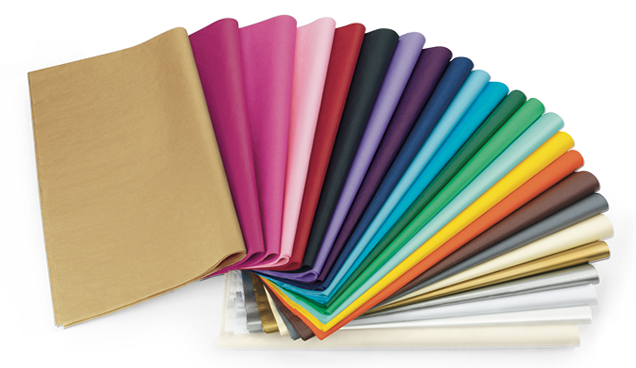
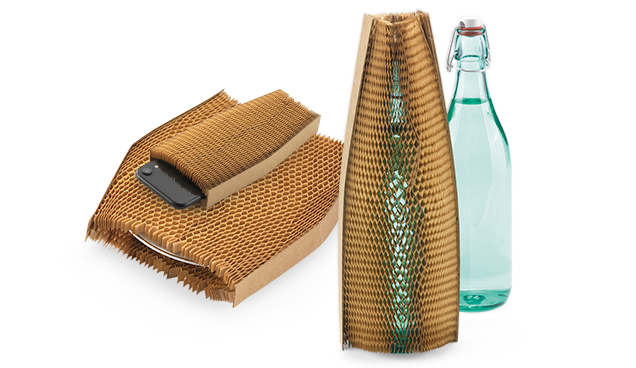
Tissue paper, crepe paper, honeycomb paper |
|
Electronic products, industrial equipment |
Paper wrap, bubble wrap, packing peanuts |
How do I assess the level of protection my products need?
BUBBLE WRAP
To effectively protect your products, choosing the right bubble wrap diameter is essential. Depending on the fragility, weight, or shape of your items, choose a bubble wrap that suits your cushioning needs.
|
|
Small ∅ 9.5 mm / H 4.2 mm |
Large ∅ 25 mm / H 9.5 mm |
Extra large ∅ 32 mm / H 12.7 mm |
|
Level of protection |
Good
protection |
Enhanced
protection |
High performance
protection |
|
Product examples |
High-end/premium products (gifts, cosmetics, textiles, decoration). |
Electronic equipment, crockery, glassware, etc. |
Artwork, heavy equipment, industrial products, etc. |
PAPER
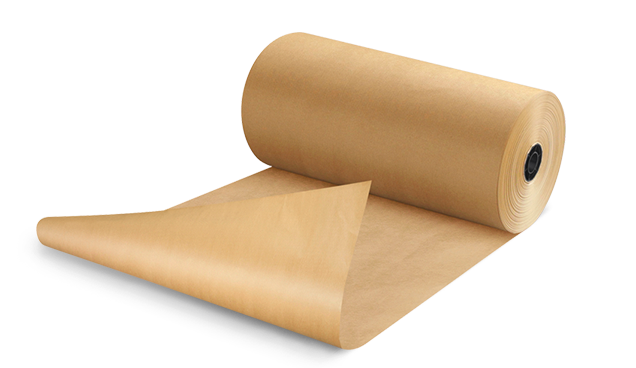
The weight (expressed in g/m²) determines the thickness and strength of the paper. Adjust it to the weight and fragility of your products for effective cushioning.
|
|
50 - 70 g/m² |
90 - 100 g/m² |
125 g/m² |
|
Level of protection |
Good
protection |
Enhanced
protection |
Superior
protection |
|
Product examples |
Books, gift sets, fashion accessories, etc. |
Electronic equipment, cosmetics, glassware, etc. |
Household appliances, and industrial products etc. |
What are the different types of protection and padding, and what are they used for?
- Absorb shocks
- Wedge, fill gaps
- Pack, protect, enhance
- Separate, protect from impact
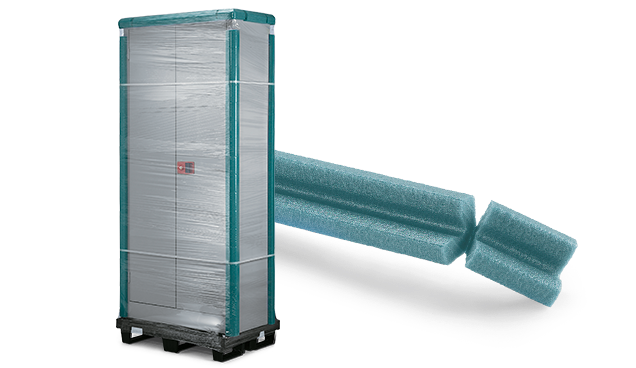
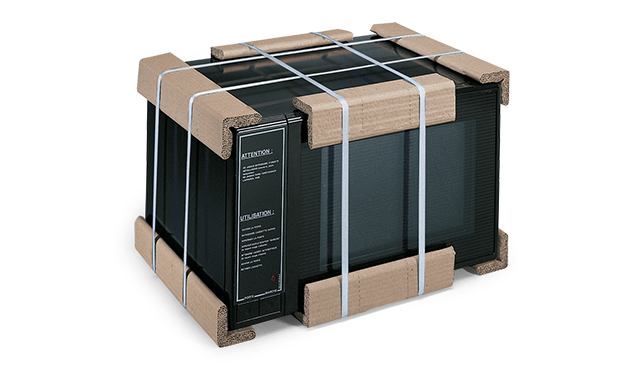
- Protect corners and edges
To wrap around and absorb shocks
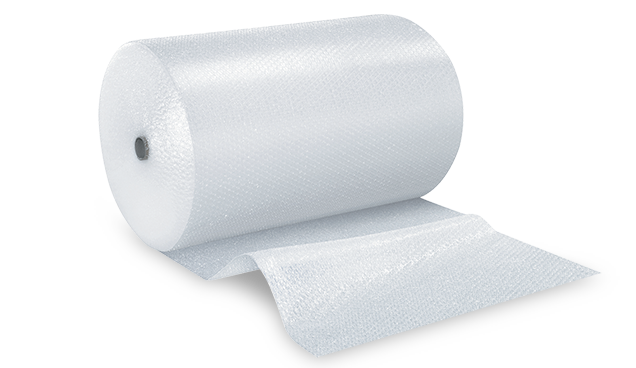
Bubble wrap
- Flexible and lightweight, it wraps easily around products.
- Economical, standard or industrial, it is the universal solution for protecting and securing your products.
- Ideal for fragile items (crockery, cosmetics, glassware).
- Suitable for all products and all types of shipping.
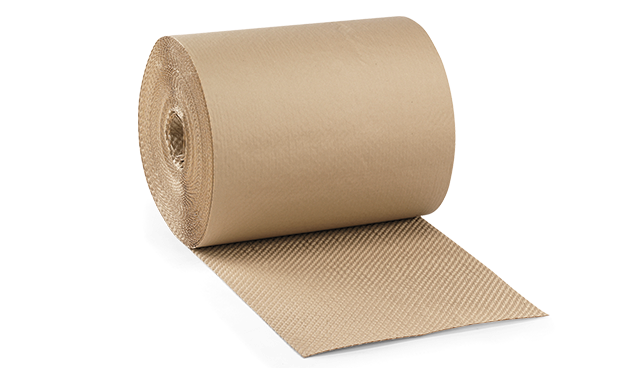
Paper bubble wrap
- Protective and attractive, it is the alternative to bubble wrap.
- Offers high tear resistance and absorbs shocks.
- Completely opaque for total privacy.
- Suitable for all products and all types of shipping.
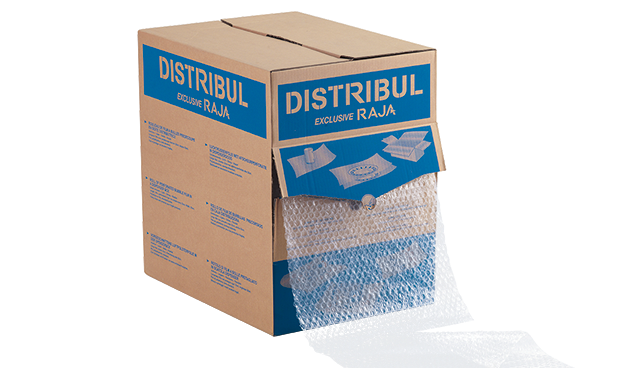
Bubble Wrap and Bubble Paper Dispenser Boxes
- Flexible and lightweight, offering both protection and time savings.
- Ideal for multi-operator workstations or repeated packing tasks.
- Kept clean and dust-free thanks to its dispenser box.
- Reduces waste and comes pre-cut, with no need for a cutter.
- Suitable for all types of products and all shipping needs.
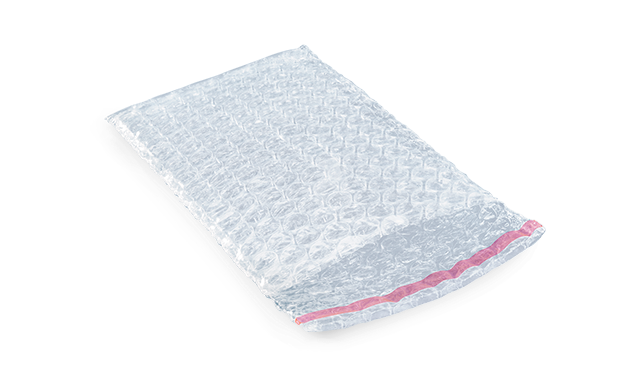
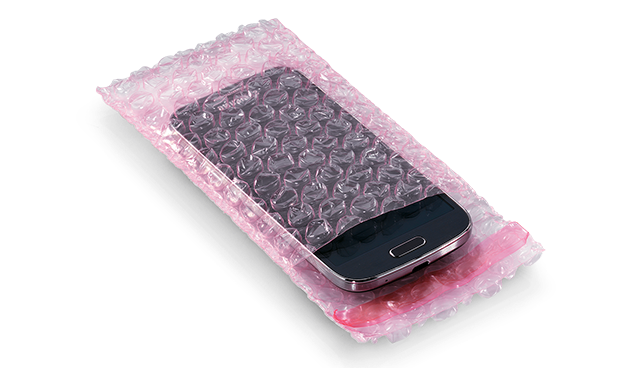
Bubble bags
- Smooth on both sides, it won’t mark products and offers effective protection against knocks and scratches.
- Quick and practical to use, it enables immediate packaging with no cutting required.
- Ideal for shipping and storing small to medium-sized items.
- Suitable for e-commerce, cosmetics, and a wide range of other sectors.
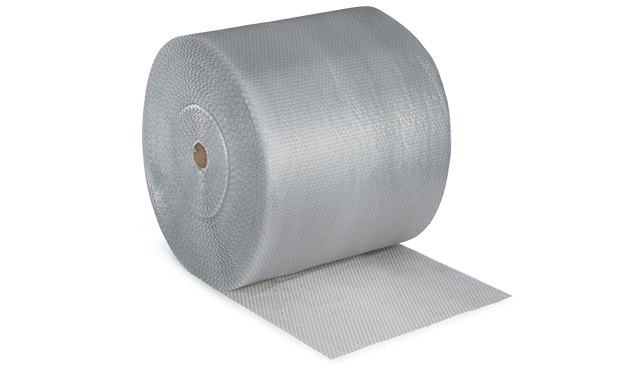
Heavy duty bubble wrap
- Provides maximum protection for all fragile items and works of art.
- Offers superior protection for heavier products.
- Thanks to its advanced air-retention technology, this bubble wrap delivers long-lasting cushioning.
- Suitable for all types of shipments that require enhanced protection.
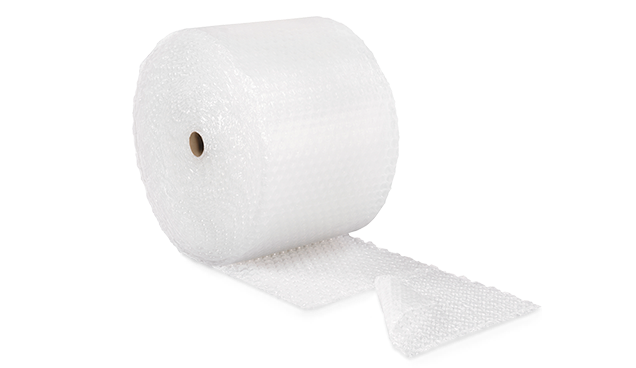
Foam wrap
- Ultra-soft, they protect delicate surfaces and mould perfectly to the shape of your products.
- Ideal for safeguarding fragile finishes.
- Available in sheets, film, or rolls, making them easy to adapt to any requirement.
- Suitable for electronics, furniture, glassware, and more.

FAQ
Why should I use protection solutions and void fill in my parcels?
How do I choose the right protective packaging and void fill for my products?
Can I safely protect multiple items in one parcel?
How much bubble wrap or packing paper should I use?

Choosing your cardboard box
Find out how to choose the perfect cardboard box for your shipments, depending on the weight, size and level of potection required.
